How to Avoid Credit Fraud: The 2026 Reference to Identity Defense
The digitization of the global economy has fundamentally altered the threat landscape for the individual consumer. In 2026, credit fraud is no longer a localized crime involving a stolen physical wallet; it is a distributed, industrial-scale enterprise fueled by data breaches, synthetic identity generation, and sophisticated social engineering. To the modern borrower, the credit rail is a vital utility, but it is also a point of systemic vulnerability. The speed with which capital moves across digital interfaces has outpaced the traditional “wait-and-see” approach to statement monitoring, necessitating a transition toward proactive defensive postures.
The complexity of contemporary financial theft lies in its multi-layered nature. We are seeing a convergence of “Account Takeover” (ATO), in which existing lines are hijacked, and “New Account Fraud,” in which an individual’s data is used to create entirely new liabilities without their knowledge. Because the credit ecosystem relies on a high-trust verification model that was designed for a less volatile era, the burden of defense has shifted increasingly onto the account holder. A definitive reference on this subject must look past simple advice like “shred your mail” and instead interrogate the structural logic of data hygiene and real-time intervention.
Successfully maintaining a secure financial profile requires an analytical understanding of the “Value of Data” on the dark web. Fraudsters are not looking for a single transaction; they are looking for “Persistence,” the ability to stay within an ecosystem undetected for months. Consequently, the objective of any robust defensive strategy is to increase the “Cost of Acquisition” for the attacker. By implementing high-friction barriers to entry, the consumer can effectively divert automated attacks toward less protected targets. This editorial pillar provides the technical scaffolding and conceptual models required to build a resilient personal security architecture.
Understanding “how to avoid credit fraud.”
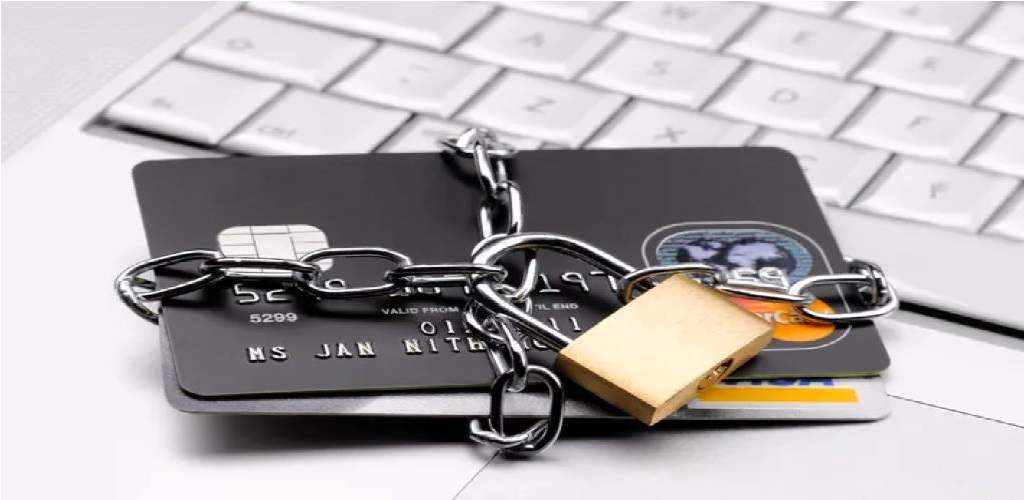
To fundamentally define how to avoid credit fraud in the current era, one must apply a “Zero-Trust” framework to one’s financial life. Credit fraud is the exploitation of a verification gap: a moment when a bank or lender assumes the person requesting capital is the owner of the identity, when in fact it is an impostor using stolen PII (Personally Identifiable Information).
Multi-Perspective Explanation
From an Information Security Perspective, avoiding fraud is about “Attack Surface Reduction.” Every time you save your credit card number on a retail website, use a public Wi-Fi network to check your bank balance, or provide your Social Security number to a medical office, you are expanding your attack surface. Defense involves a clinical audit of where your data resides and the systematic removal of high-risk exposures.
From a Behavioral Perspective, fraud is a game of “Exploited Urgency.” Most successful credit fraud involves some element of social engineering, such as a phone call from a “fraud department” that is actually a scammer, or a “package delivery” text that requires a small fee. Understanding the psychology of these interactions is as important as any technical tool; if you can recognize the “Urgency Trigger,” you can neutralize the threat before a single byte of data is exchanged.
From a Systemic Perspective, the best defense is the “Freeze-First” model. By placing a security freeze on credit reports at the bureau level, the consumer effectively “shuts the door” to the entire lending market. Fraudsters rely on the speed of instant credit approval; a frozen report breaks that speed, forcing the lender to stop and seek further verification.
Oversimplification Risks
A pervasive risk is the “Monitoring Fallacy.” Many people believe that paying for a credit monitoring service is synonymous with protection. In reality, monitoring is a lagging indicator; it tells you after the fraud has occurred. True avoidance requires leading indicators and preventative blocks, such as MFA (Multi-Factor Authentication) and hardware security keys.
Contextual Background: The Industrialization of Identity Theft
The history of credit fraud has transitioned from the “Physical Era” to the “Industrial Data Era.” In the Legacy Era (1970–2005), fraud was largely physical: dumpster diving for “Pre-Approved” credit offers, mail theft, and card skimming at gas pumps. The scale was limited by the physical proximity of the thief.
The Breach Era (2006–2021) was characterized by the mass exfiltration of data from major corporations (Equifax, Target, Yahoo). Fraud became a game of volume. Thieves no longer needed to steal one wallet; they could buy 100,000 identities on a dark web forum for less than the cost of a laptop.
By 2026, we will have entered the AI-Enhanced Synthetic Era. Fraudsters now use sophisticated algorithms to combine real Social Security numbers with fake names and addresses to create “Synthetic Identities.” These identities build their own credit scores over several years before “busting out” with massive loans. This makes detection nearly impossible for traditional systems. Consequently, the individual must now protect not just their active accounts, but the very “existence” of their identity in the credit bureau databases.
Conceptual Frameworks and Mental Models
1. The “Defense-in-Depth” Model
This model posits that no single tool is sufficient. A robust defense requires “Layers”: Layer 1 is the Credit Freeze; Layer 2 is the Hardware Security Key for account access; Layer 3 is the Real-Time Transaction Alert; Layer 4 is the Virtual Card Number for online shopping. If one layer is breached (e.g., a data leak at a merchant), the other layers prevent the breach from becoming a total account takeover.
2. The “PII Half-Life” Framework
Every piece of your personal data has a “Half-Life”—a period during which it is most useful to a thief. A credit card number has a short half-life (it can be canceled), but your Social Security number and mother’s maiden name have an “Infinite Half-Life.” This framework suggests that “Immutable Data” (SSN, Birthday) requires the highest level of protection, as it can never be truly reset.
3. The “Friction-as-a-Feature” Heuristic
This mental model reverses the typical consumer desire for “Convenience.” It argues that for high-stakes financial accounts, friction is good. Choosing a bank that requires a phone call for large wire transfers or a 24-hour waiting period for new payees is a strategic advantage. “Speed is the Fraudster’s Ally; Friction is the Consumer’s Friend.”
Key Categories of Fraudulent Attack Vectors
| Category | Primary Mechanism | Strategic Countermeasure |
| Account Takeover (ATO) | Phishing or credential stuffing to gain login. | Hardware Security Keys (FIDO2/WebAuthn). |
| Card-Not-Present (CNP) | Using stolen card details on e-commerce sites. | Virtual/Disposable Card Numbers. |
| Synthetic Identity | Creating a fake person using a real SSN. | Credit Freezes and “Identity Lock.” |
| Authorized Push Payment | Tricking the user into sending a Zelle/Wire. | Verification of the recipient via a separate channel. |
| Sim Swapping | Hijacking the user’s phone number. | Port-Out PINs and App-based 2FA (No SMS). |
| Physical Skimming | Devices on ATMs or gas pumps. | Tap-to-Pay or Mobile Wallet (Apple/Google Pay). |
Detailed Real-World Scenarios and Decision Logic
The “Fraud Alert” Call
An individual receives a call from their bank’s “Fraud Department” stating there is a suspicious $4,000 charge on their card. The caller asks the user to “verify” their identity by reading back an SMS code they just received.
-
The Logic: Scammers are using the SMS code to reset the user’s password in real-time.
-
The Decision: Hang up. Call the bank back using the official number on the back of the physical card.
-
Failure Mode: Providing the code. The scammer gains total access to the account, changes the contact info, and drains the funds within minutes.
The “Public Wi-Fi” Transaction
A user is at an airport and realizes they need to pay a bill. They connect to “Free_Airport_WiFi” and log in to their banking app.
-
The Logic: An “Evil Twin” hotspot can intercept the data stream (Man-in-the-Middle attack).
-
The Action: Use a cellular hotspot or a trusted VPN.
-
Second-Order Effect: Even if the site uses HTTPS, certificate pinning vulnerabilities could still expose sensitive credentials.
Planning, Cost, and Resource Dynamics
The “Cost of Security” is largely measured in time and minor logistical inconvenience, though some tools carry direct costs.
2026 Security Resource Matrix
| Resource | Direct Cost | Time Investment | Protection Yield |
| Credit Freeze (Bureau) | $0 (Federal Law) | 1 hour (initial set up) | Maximum (New Account Fraud) |
| Password Manager | $0 – $60 / year | Continuous | High (Credential Stuffing) |
| Hardware Security Key | $25 – $75 | 30 minutes | Maximum (Phishing/ATO) |
| Monitoring Service | $10 – $30 / mo | Zero | Moderate (Lagging detection) |
Tools, Strategies, and Support Systems
-
Credit Bureau Freezes: Contacting Equifax, Experian, and TransUnion individually to lock your files.
-
Virtual Card Generators: Using services that create a unique 16-digit number for every merchant, limiting the damage of a database breach.
-
Mobile Wallets (Tokenization): Utilizing Apple Pay or Google Pay, which sends a one-time “Token” rather than your actual card number to the merchant.
-
App-Based MFA: Using Authenticator apps (TOTP) or hardware keys instead of SMS codes, which are vulnerable to SIM swapping.
-
In-App Transaction Alerts: Setting a threshold (e.g., $0.01) so you receive a push notification for every transaction.
-
Electronic “Identity Vaults”: Storing digital copies of birth certificates and SSN cards in an encrypted, offline-accessible container.
-
Port-Out Protection: Contacting your mobile carrier to ensure your phone number cannot be moved to a new SIM without a specific, non-obvious PIN.
-
Dark Web Monitoring: Utilizing free tools to check if your email or passwords have appeared in recent credential dumps.
Risk Landscape and Taxonomy of Failure Modes
-
“The MFA Fatigue Trap”: An attacker triggers dozens of “Approve Login” notifications on a user’s phone, hoping the user will eventually click “Approve” just to stop the noise.
-
“The Single-Point-of-Failure”: Using the same “Master Password” for your Password Manager and your primary Email account.
-
“The Secondary Creditor Gap”: Forgetting that smaller credit bureaus (Innovis, ChexSystems) also exist, failing to freeze these allows fraudsters to open bank accounts or lease apartments in your name.
-
“The Social Media Over-Share”: Posting “First Car” or “High School Mascot” photos, which provide the answers to common “Security Questions” used by banks.
Governance, Maintenance, and Long-Term Adaptation
A robust defense requires a “Biannual Security Audit.”
-
Adjustment Triggers:
-
Receiving a “Password Reset” email you didn’t request.
-
Losing your physical wallet (Immediate “Kill-Switch” of all cards).
-
Noticing a “Small” ($1.00) charge from an unknown merchant (The “Ping” before the “Drain”).
-
-
Maintenance Checklist:
-
Rotate the “Master Password” for your password manager.
-
Check the “Authorized Devices” list on your primary banking and email accounts.
-
Review your Annual Credit Report from all three bureaus to look for unfamiliar inquiries.
-
Measurement, Tracking, and Evaluation
-
Leading Indicators: “MFA Adoption Rate” across all financial accounts; “Number of Active Virtual Cards.”
-
Lagging Indicators: “Unauthorized Transaction Count”; “Number of Data Breach Notifications Received.”
-
Documentation Examples:
-
The “Emergency Response Sheet”: A physical (non-digital) list of phone numbers for all your banks’ fraud departments.
-
The “Recovery Log”: A record of dates and reference numbers for any disputes filed.
-
Common Misconceptions and Oversimplifications
-
“My bank will always refund me”: Not necessarily. If you were “tricked” into authorizing a Zelle transfer, many banks consider that a voluntary payment and will not reimburse you.
-
“I check my statement every month.”: That’s too slow. In 2026, an account can be drained in minutes. You need real-time push notifications.
-
“Credit monitoring is enough”: Monitoring only tells you the house is on fire; a credit freeze prevents the arsonist from entering.
-
“I don’t have enough money for anyone to steal”: Fraudsters don’t just want your cash; they want your credit capacity. They can take out $50,000 in loans in your name, regardless of your bank balance.
-
“Incognito mode keeps me safe”: It hides your history from your spouse, but it does nothing to stop a site from capturing your data.
-
“Shredding mail is the most important thing.: It was in 1995. Today, 99% of fraud occurs through digital channels.
-
“Complex passwords are the key”: A complex password is still vulnerable to a phishing site. A hardware key is the only “un-phishable” tool.
Ethical and Practical Considerations
There is a practical trade-off between “Security” and “Agility.” A person with a frozen credit report cannot simply walk into a dealership and drive away with a car in 20 minutes; they must “thaw” their credit first. However, in an age where identity is a commodity, this “Inconvenience Tax” is a necessary investment. Ethically, we must also recognize that as the “tech-savvy” protect themselves, fraudsters will increasingly target the elderly and the digitally marginalized. Helping family members implement “Credit Freezes” is an act of collective financial defense.
Conclusion
The endeavor of how to avoid credit fraud is a permanent shift in one’s relationship with the digital world. It is a move from a posture of “Implicit Trust” to one of “Verified Access.” There is no “Final Solution” to fraud; as defensive technologies improve, so too do the methods of the attacker. Success is found in the clinical application of friction, the aggressive protection of immutable data, and the maintenance of a multi-layered defensive stack. By treating your identity with the same rigor a bank treats its vault, you ensure that your financial future remains under your exclusive control.