Top Metal Cards in America: 2026 Definitive Strategy Guide
The shift in American consumer credit from PVC plastic to high-density metallic alloys represents a fundamental transition in the psychology of the transaction. Initially conceived as a tactical differentiator for ultra-high-net-worth invitation-only products, the metal card has proliferated into the mass-affluent market. In 2026, the physical weight of a card serves as a non-verbal signal of a consumer’s creditworthiness, yet the material substance often distracts from the complex financial architecture beneath the surface. For the sophisticated user, the alloy is merely the container for a suite of insurance, travel, and lifestyle benefits that must be rigorously audited to justify their often-substantial annual costs.
The “metal-clad” sector of the United States credit market is currently defined by an arms race of weight, durability, and tactile feedback. However, as the novelty of “the clink” on a marble countertop fades, the industry is pivoting toward structural utility. We are seeing a move away from pure prestige toward “Integrated Infrastructure” products that combine the durability of stainless steel, titanium, or tungsten with high-velocity earning structures and bespoke access. This evolution demands a more analytical approach from the consumer, moving beyond aesthetic preference toward a “Cost-Benefit Equilibrium” that accounts for interchange capture and service-layer redundancy.
This editorial pillar deconstructs the landscape of premium metallic credit instruments. We will move beyond the superficial lists of “heaviest cards” to examine the historical systemic evolution of the medium, the mental models required to evaluate their true value, and the logistical risks associated with high-durability physical payment methods. This is a definitive reference for those who view their credit portfolio as a strategic asset, where the physical form factor is but one variable in a broader equation of financial optimization.
Understanding “top metal cards in america”
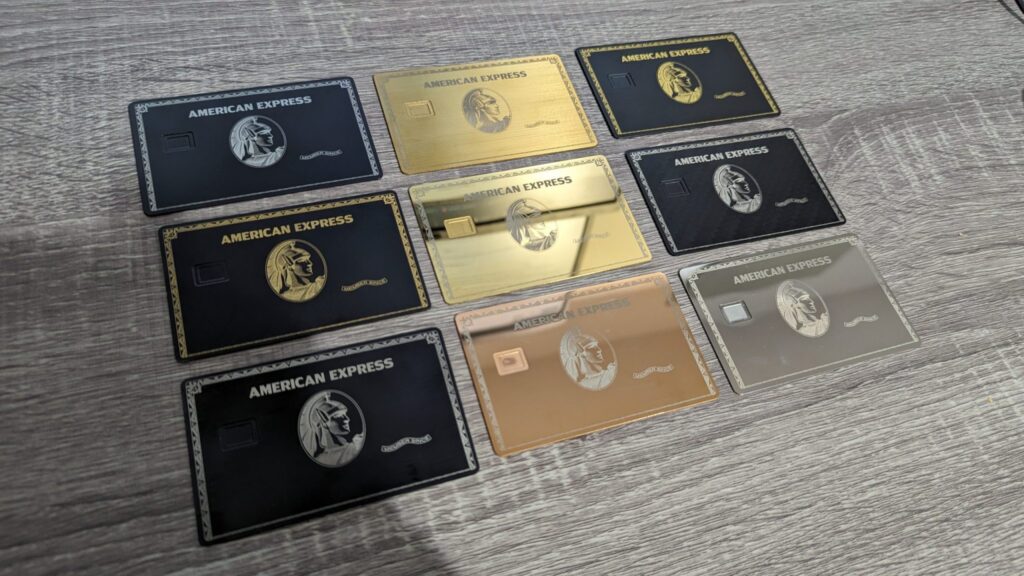
To evaluate the top metal cards in America requires an analytical detachment from the marketing of “prestige.” In the current market, a metal card can range from a 10-gram hybrid (plastic front, metal back) to a 28-gram solid tungsten slab. Understanding this landscape requires viewing the card through three distinct lenses.
Multi-Perspective Explanation
From a Materials Science Perspective, the industry has largely converged on stainless steel or brass cores, often coated in physical vapor deposition (PVD) finishes. The “weight” of the card is a deliberate engineering choice designed to trigger a specific haptic response in the user. This “haptic prestige” creates a sense of permanence and value, which issuers hope will lead to “top-of-wallet” status, the psychological tendency for a consumer to reach for the most substantial-feeling card for every transaction.
From a Financial Engineering Perspective, the metal card is a tool for “Customer Retention.” The manufacturing cost of a metal card is significantly higher than plastic (roughly $20–$50 versus $1). This initial sunk cost by the issuer is a bet on the “Lindy Effect,” the idea that the longer a card survives in a wallet without cracking or peeling, the longer the customer relationship will persist. For the user, the metal card is a vehicle for “Interchange Capture,” where the high annual fee is offset by high-multiplier rewards and credits.
From a Logistical Perspective, metal cards present unique friction points. They do not work in some legacy “dip” readers, they cannot be destroyed by a standard home shredder, and they frequently trigger secondary screening at airport security checkpoints. A “top” card balances its aesthetic and tactile appeal with seamless functionality across the global payment infrastructure.
Oversimplification Risks
A common oversimplification is the belief that “Weight Equals Worth.” There are several 18-gram metal cards with zero annual fees and mediocre rewards, while some of the most powerful corporate and business cards remain plastic for logistical ease. Another risk is the “Premium Paradox”: as metal cards become more common, their ability to serve as a status symbol diminishes, forcing the true value back into the digital benefits layer rather than the physical alloy.
Contextual Background: From Paper to Palladium
The evolution of the credit card medium is a history of increasing durability and perceived value. The first “Charge-Plates” of the 1920s were actually small metal tags, more akin to dog tags than modern cards. When the Diners Club launched in 1950, it used paper. It wasn’t until 1959 that American Express introduced the first plastic (PVC) card, which became the global standard for half a century.
The modern “Metal Era” began in 1999 with the invitation-only American Express Centurion, made of titanium. For nearly a decade, titanium was the “secret handshake” of the financial elite. The systemic shift occurred in 2016 with the launch of the Chase Sapphire Reserve. By offering a metal card to the “mass-affluent” market with a high sign-up bonus, Chase successfully democratized the aesthetic. Today, in 2026, metal has become the baseline expectation for any card with an annual fee above $250, forcing issuers to innovate through exotic materials like reclaimed ocean plastic composites or ultra-dense tungsten alloys.
Conceptual Frameworks and Mental Models
1. The “Haptic Retention” Heuristic
This framework posits that a user is 30% less likely to cancel a card that they find physically pleasing to hold. Issuers use “Weight Grading” to ensure their card feels more substantial than the competitor’s. The savvy user must invert this: If I stripped away the metal and the weight, would the rewards structure still stand on its own?
2. The “Fee-to-Alloy” Ratio
This model treats the annual fee as a purchase of both a physical object and a service. A $95 metal card has a high “Alloy Value” but usually lower service utility. A $695 card has a lower “Alloy-to-Fee” ratio, meaning the user is paying almost entirely for the “Invisible Layer” (insurance, concierge, credits). The goal is to maximize the Invisible Layer, not the weight of the metal.
3. The “Durability Dividend.”
Metal cards do not “snap” and rarely suffer from magnetic strip demagnetization compared to plastic. The “Dividend” is the time saved by not having to request replacement cards every 24 months. For a global traveler, the reliability of the physical medium is a critical, if boring, benefit.
Key Categories of Metal Card Variations
| Material Category | Typical Weight | Common Use Case | Strategic Trade-off |
| Hybrid (Metal/PVC) | 10g – 13g | Entry-level premium. | Prone to delamination (peeling). |
| Stainless Steel | 15g – 18g | The industry standard. | Excellent balance of weight and utility. |
| Titanium | 12g – 15g | Ultra-high-end (Invitation). | Very “stiff”; doesn’t always work in older ATMs. |
| Tungsten | 22g – 28g | “Heavyweight” status. | Can be brittle; very expensive to replace. |
| Brass/Gold Plated | 17g – 20g | Aesthetic “Bling” focus. | Finish can tarnish or scratch over time. |
Decision Logic: The “Wallet Weight” Audit
If you carry 10 cards, and five of them are metal, your wallet’s physical footprint increases significantly. The “Top” strategy is to have only one or two “Master” metal cards, typically one for dining/lifestyle and one for travel, while keeping the rest of the portfolio digital or in plastic to minimize bulk.
Detailed Real-World Scenarios and Decision Logic
The Security Checkpoint Friction
A traveler with a solid tungsten card passes through a TSA PreCheck metal detector.
-
The Logic: Unlike plastic, high-density metal cards will often trigger the alarm.
-
The Decision: The user must proactively remove the card or wallet, negating some of the speed of PreCheck.
-
Failure Mode: Forgetting the card is in a pocket, leading to a secondary “pat-down” and a 10-minute delay.
The Legacy Reader Failure
A user tries to use a thick metal card in an old parking meter or a rural “dip” style ATM in Europe.
-
The Action: The card’s thickness (which can be 20% greater than plastic) causes the machine to jam or reject the card.
-
Outcome: The user must have a plastic “Back-up” card or rely on contactless (NFC) payments.
-
Second-Order Effect: The “Status” of the metal card is replaced by the frustration of a failed transaction.
Planning, Cost, and Resource Dynamics
The “Cost” of a metal card is a combination of the annual fee and the “Environmental Opportunity Cost” of its disposal.
Range-Based Resource Table
| Expense Type | Range | Factors |
| Standard Annual Fee | $95 – $695 | Tier of reward:s; guest privileges. |
| Replacement Fee | $0 – $50 | Some issuers charge for lost metal cards. |
| International Transaction Fee | 0% – 3% | Most “top” metal cards have 0% fees. |
| Physical Lifecycle | 4 – 7 Years | Metal cards last twice as long as plastic. |
Tools, Strategies, and Support Systems
-
The “Pre-Paid Return” Envelope: Top issuers provide a secure envelope to return expired metal cards for “Melt-Down” recycling.
-
Contactless Priority: Using the card via Apple Pay/Google Pay for 90% of transactions, using the physical metal card only for “High-Touch” situations (e.g., hotel check-in).
-
The “Double-Dip” Audit: Checking if your metal travel card and metal dining card have overlapping lounge memberships (e.g., Priority Pass).
-
Digital Wallet Consolidation: Mapping metal cards to specific “Spend Categories” in your phone to maximize 4x/5x multipliers without carrying the physical weight.
-
Card Protection Sleeves: Using RFID-blocking sleeves is not for security (which is rarely an issue), but to prevent the PVD coating on the metal from scratching other cards.
-
The “Concierge Test”: Evaluating a card’s “Metal Status” by the quality of the human concierge it unlocks, rather than the sound it makes.
Risk Landscape and Taxonomy of Failure Modes
-
“The Delamination Trap”: Hybrid cards where the metal and plastic separate, potentially getting stuck inside a card reader.
-
The “Destroyability” Risk: You cannot easily destroy a metal card. If you toss it in the trash, an identity thief can recover the physical card, which remains intact for decades.
-
“Alloy Devaluation”: As no-fee cards (like the Apple Card) adopt metal, the “Status” signal of a $695 metal card is diluted.
-
The “Contactless Shield”: Some thick metal cards have poor NFC (contactless) range because the metal interferes with the antenna, forcing the user to “dip” or “swipe” more often.
Governance, Maintenance, and Long-Term Adaptation
A metal card portfolio requires “Physical Maintenance” as well as financial oversight.
Monitoring Cycles
-
Monthly: Wipe down PVD-coated cards with a microfiber cloth to prevent “Fingerprint Etching.”
-
Annually: Audit the “Reward Alpha”—did the extra weight/fee result in at least $500 in net profit over a 2% cash-back baseline?
Adjustment Triggers
-
Travel Frequency Drop: If you stop traveling, the “Lounge Access” and “Primary Rental Insurance” attached to the metal card lose their value, justifying a “Downgrade” to a plastic, no-fee version.
-
Physical Damage: If a tungsten card is dropped on concrete, it can “Shatter” or chip. This is an immediate trigger for a replacement request.
Measurement, Tracking, and Evaluation
-
Leading Indicators: “Top-of-Wallet Frequency”—how often you instinctively reach for the metal card over others.
-
Lagging Indicators: “Total Points per Gram”—a cynical but effective way to see if you are paying for weight or for yield.
-
Documentation Examples:
-
The “Melt-Down Log”: Tracking the return of expired cards to ensure security.
-
The “Fee Offset Spreadsheet”: Mapping every $15 or $20 “Lifestyle Credit” (Uber, Grubhub, etc.) against the annual fee.
-
Common Misconceptions and Oversimplifications
-
“Metal cards are more secure”: False. The security is in the EMV chip, which is identical to plastic.
-
“Titanium is the heaviest”: False. Titanium is actually prized for being light and strong. Tungsten and Stainless Steel are much heavier.
-
“Only rich people have metal cards”: In 2026, many “Build-Your-Credit” cards now offer metal versions to entice younger users.
-
“I can’t take it on a plane”: You can, but it may require a “Bin Scan” rather than staying in your pocket.
-
“The ‘Clink’ is the same for all cards”: High-density tungsten has a “thud,” while hybrid cards have a “clack.” Purists can tell the difference.
-
“Metal cards don’t expire”: They do; the EMV chip and the contract have an expiration date, regardless of the durability of the steel.
Ethical and Contextual Considerations
The production of metal cards has a higher carbon footprint than plastic, though their longer lifespan partially offsets this. From a social perspective, the metal card is a “Class Signal” that can influence the quality of service in hospitality environments (the “Table 1” effect). However, the ethical user recognizes that the card is a tool for financial efficiency, not a tool for social stratification.
Conclusion
The era of the top metal cards in America has matured from a flashy gimmick into a standard of premium financial service. While the physical weight provides a satisfying tactile experience, the true “Metal” of a card is found in its ability to protect the user’s travel, enhance their lifestyle through exclusive access, and provide a high-yield return on every dollar spent. By applying a rigorous “Invisible Layer” audit and a “Haptic Retention” check, the modern consumer can ensure that their wallet’s weight is backed by a proportional weight in financial utility and strategic advantage.