
Compare Rewards Program Plans: The 2026 Definitive Reference to Loyalty
The institutionalized architecture of loyalty and rewards has transitioned from a marketing curiosity into a distinct asset class. In 2026, the sophisticated consumer no longer views “points” or “miles” as mere discounts, but as a form of private, programmable currency. The proliferation of these ecosystems, ranging from bank-proprietary points to airline and hotel-specific currencies, has created a complex financial layer that requires a rigorous, analytical approach to navigate.
The challenge in contemporary loyalty management lies in the “Opacity of Valuation.” Unlike sovereign currencies, the value of a rewards point is subject to the unilateral “monetary policy” of the issuing entity. A sudden change in a redemption table can devalue an individual’s holdings overnight, effectively acting as a high-inflation environment without the oversight of a central bank. Consequently, the ability to evaluate and benchmark these systems has become a critical skill for maintaining financial mobility and optimizing high-velocity spend.
To achieve a net-positive outcome, one must look past the “sign-up bonus” and examine the structural durability of the underlying program. This involves an audit of transfer partner networks, an assessment of the “liquidity” of the points, and a deep understanding of the “administrative drag” required to extract maximum value. This editorial reference provides the conceptual scaffolding necessary to move from a reactive “coupon-clipper” mindset to a proactive model of “Loyalty Governance.”
Understanding “compare rewards program plans.”
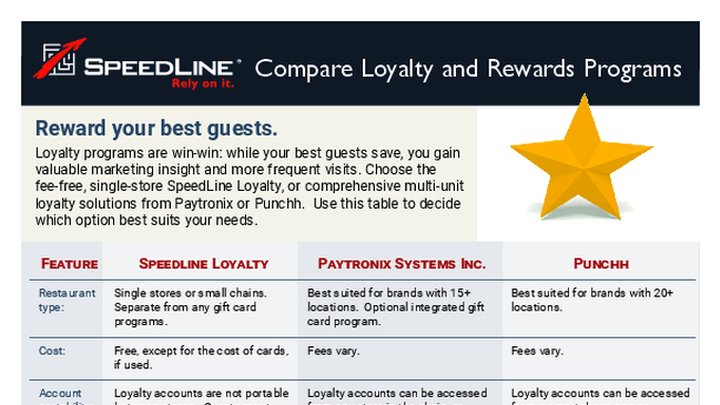
The effort to compare rewards program plans is fundamentally a search for “Transfer Alpha,” the ability to convert a general-purpose reward into a high-value specific redemption that far exceeds the standard one-cent-per-point benchmark. In 2026, this comparison requires a multi-perspective filter that accounts for both the mathematical yield and the logistical feasibility of the program.
Multi-Perspective Explanation
From a Currency perspective, rewards programs are divided into “Fixed-Value” and “Transferable” systems. Fixed-value plans offer a predictable, cash-like redemption (e.g., 1.5 cents per point toward travel), which minimizes risk but caps the potential upside. Transferable systems, however, function as “Gateway Currencies,” allowing the user to move points to a dozen or more airline and hotel partners. The “Best” plan is often defined by the depth and stability of these partner bridges.
From a Behavioral perspective, a program’s value is contingent on its “Lifestyle Alignment.” If a plan offers 5x multipliers on office supplies but the user is a digital nomad with zero physical overhead, the high multiplier is functionally useless. Comparison must therefore start with a “Spend Audit,” matching the program’s earning accelerators to the user’s organic, high-metabolism spending categories.
From an Administrative perspective, excellence is found in “Low-Friction redemptions.” A program might have the highest theoretical value but require the user to spend forty hours a year searching for “Award Space” on obscure airline partners. For the time-constrained professional, a program that offers slightly lower value but higher “Redemption Liquidity” (such as a primary travel portal with no blackout dates) may be the superior choice.
Oversimplification Risks
A common error in the marketplace is the “Gross Yield Fallacy”—evaluating a program solely on its sign-up bonus. A $1,000 bonus is easily eroded over three years by a high annual fee and a poor “Base Earn Rate.” Furthermore, many users ignore “Orphaned Point Risk,” where points are scattered across five different programs, none of which have enough balance to trigger a meaningful redemption.
Contextual Background: The Evolution of Private Currencies
The trajectory of loyalty has moved from “Linear Incentives” to “Ecosystem Integration.” The Standardization Era (1980–2000) was defined by the birth of American Airlines’ AAdvantage, where the logic was simple: fly miles, earn miles. The rewards were a byproduct of the core service.
The Financialization Era (2001–2020) saw the rise of bank-led programs (like Chase Ultimate Rewards and Amex Membership Rewards). During this period, the credit card became the primary “earning engine,” outstripping actual travel as the source of points. This era introduced the concept of “Point Portability,” allowing users to decide the destination of their rewards at the moment of use.
By 2026, we will have entered the Era of the Integrated Life-Stack. Rewards programs are now “Behavioral Operating Systems.” They integrate with wellness apps, climate-offset platforms, and investment accounts. The “Plan” is no longer just a travel tool; it is a mechanism for “Margin Recovery” in an era of rising costs and logistical volatility.
Conceptual Frameworks and Mental Models
1. The “Cent-Per-Point” (CPP) Floor
This framework establishes a baseline for evaluation. If cash is worth 1.0, any redemption below 1.25 CPP is considered a “Value Leak.” Users should aim for redemptions that hit the “Alpha Zone” (>2.5 CPP), typically found in international premium cabin travel.
2. The “Velocity of Accumulation” vs. “Rate of Devaluation.”
This model views points as “perishable assets.” If a program devalues its award chart by 15% annually, but the user only earns points at a 5% annual rate, the user is losing “Purchasing Power” over time. The “Best” plan is the one where the user’s velocity of earnings stays ahead of the issuer’s inflation.
3. The “Network Effect” of Transfer Partners
This heuristic prioritizes programs that serve as “Hubs.” A hub program (like Amex or Bilt) is superior because it connects to multiple alliances (Star Alliance, Oneworld, SkyTeam). This provides “Redemption Redundancy”—if one airline devalues, the user can pivot to another without losing the value of their accrued points.
Key Categories of Rewards Architectures
| Category | Primary Strategic Strength | Key Trade-off | Ideal Use Case |
| Transferable Hubs | Maximum flexibility; “Alpha” potential. | High administrative load. | High-frequency global travelers. |
| Fixed-Value Portals | Simplicity; no blackout dates. | Lower “ceiling” on point value. | Users who value time over optimization. |
| Co-Branded Loyalty | Guaranteed status; specific perks. | Illiquid; locked to one brand. | Brand-loyalists (e.g., Hyatt, Delta). |
| Cash-Equivalent Systems | Ultimate liquidity; no inflation risk. | No “Alpha” potential (1.0 CPP cap). | Cash-flow focused households. |
| Hybrid Ecosystems | Offers both cash and transfer options. | Complex fee structures. | Diverse spenders (e.g., Capital One). |
Detailed Real-World Scenarios and Decision Logic
The “Asynchronous” Vacationer
A family travels once a year during peak school holidays (Christmas/July).
-
The Logic: They cannot find “Award Space” for five people during peak times.
-
The Decision: Prioritizing a Fixed-Value Portal where points can be used like cash for any seat on any airline.
-
Outcome: They avoid the “Blackout Date” trap, ensuring their points are actually usable when they have the time to use them.
The “Transatlantic” Business Nomad
A professional flies from London to New York four times a year.
-
The Logic: They are looking for “Upstream Value” using points to move from Economy to Business Class.
-
The Action: Selecting a Transferable Hub with strong partners in the Oneworld alliance.
-
Second-Order Effect: By transferring points at a 1:1 ratio to a partner that offers “Distance-Based” awards, they achieve an effective 4.5 CPP value.
Planning, Cost, and Resource Dynamics
Maintaining a “High-Alpha” rewards portfolio involves both direct and indirect costs.
2026 Rewards Portfolio Resource Mapping
| Resource Layer | Cost/Requirement | Management Style | Value Realization |
| Direct Annual Fees | $250 – $1,200 | Upfront Investment | Access to Hubs/Lounges |
| Administrative Time | 2-4 Hours / Month | Active Monitoring | Award Space Discovery |
| Opportunity Cost | 1% – 3% Interest | Passive | Forgoing Cash-Back Yield |
| Cognitive Load | High | Strategic | Navigating Partner Logic |
Tools, Strategies, and Support Systems

-
Award Search Aggregators: Tools that scan all airline partners simultaneously to find the “Point-Value Sweet Spots.”
-
Point Tracking Dashboards: Centralized platforms that monitor balances and expiration dates across 20+ programs.
-
“Earn-and-Burn” Pacing: A strategy of keeping point balances low (less than 12 months of travel inventory) to mitigate devaluation risk.
-
Multiplier Laddering: Systematically using different cards for different categories (e.g., 4x Dining, 3x Travel, 2x Everything Else).
-
Retention Negotiation: Annual calls to issuers to secure “Retention Bonuses” that offset the annual fee.
-
“Status Match” Chains: Leveraging status in one program to instantly gain status in a competing program.
Risk Landscape and Taxonomy of Failure Modes
-
“The Orphaned Point Trap”: Having 10,000 points in five different programs, none of which are enough for a flight, effectively renders the value zero.
-
“Devaluation Cliff”: A program announcing a 30% increase in award costs with only 24 hours’ notice.
-
“Account Shut-Down”: Issuers closing accounts due to “Gaming” behavior (e.g., excessive churning), leading to a total loss of accrued points.
-
“The Utilization Shadow”: Overspending on high-multiplier categories to “earn points,” resulting in interest charges that exceed the point value.
Governance, Maintenance, and Long-Term Adaptation
Effective rewards management requires a “Governance Audit” every 180 days.
-
Adjustment Triggers:
-
A primary transfer partner leaves the network.
-
A shift in the user’s “Primary Airport Hub” (e.g., moving from a Delta hub to a United hub).
-
The introduction of a “New-Market” card with significantly higher multipliers.
-
-
Maintenance Checklist:
-
Audit “Base Earn Rate” vs. current spend habits.
-
Confirm no points expire within the next 180 days.
-
Evaluate “Net Value” (Total points earned – Annual fee).
-
Measurement, Tracking, and Evaluation
-
Leading Indicators: “Average Multiplier per Dollar” (Target > 2.0); “Transfer Alpha Potential” (Number of active 1:1 partners).
-
Lagging Indicators: “Realized CPP” (Value of travel taken / Points used); “Fee-to-Benefit Ratio.”
-
Documentation Examples:
-
The Redemption Log: A history of all travel booked with points and the equivalent cash price.
-
The Partner Map: A visual guide of which points move to which airlines.
-
Common Misconceptions and Oversimplifications
-
“Miles are better than cash”: Only if you book international premium travel. For the domestic economy, cash is often superior.
-
“Points are free money”: No, they are a “Rebate” on your spending and your personal data.
-
“I should save my points for retirement.”: Dangerous. Points are not an investment; they are a depreciating currency. Use them within 12-24 months.
-
“High annual fees are always bad”: If a $550 fee provides $1,500 in tangible travel value, the fee is a high-ROI investment.
-
“Status is only for frequent flyers”: In 2026, status can often be “Bought” or “Earned” through credit card spend alone.
-
“All transfer ratios are 1:1”: False. Some are 2:1 or even 3:1, which can destroy the value of the transfer.
Conclusion
To compare rewards program plans is to engage in a sophisticated game of “Private Macroeconomics.” In 2026, the goal is not to “collect points” but to build a resilient, liquid portfolio of financial assets that can be deployed to bypass the rising costs of global mobility. Success is defined by the absolute avoidance of “Devaluation Traps” and the consistent realization of “Transfer Alpha.” By treating these programs with the same rigor as a traditional investment portfolio, the modern consumer transforms their everyday spend into a powerful engine of restorative value and logistical freedom.