Premium Travel Card Plans: The 2026 Reference to Global Mobility
The landscape of high-tier consumer credit has moved beyond the simple exchange of annual fees for airport lounge access. In 2026, the global travel infrastructure is increasingly bifurcated between those who navigate it through standard commercial channels and those who leverage specialized financial instruments to bypass systemic friction. The modern premium card is no longer a mere payment method; it is a “logistical overlay,” a suite of contractual entitlements designed to mitigate the volatility of modern transit, from automated insurance indemnification to priority passage through overburdened security checkpoints.
This evolution is driven by a fundamental shift in how issuers perceive “Value-Added Services.” As interchange fees face global regulatory pressure, banks have pivoted toward “Ecosystem Lock-in.” By integrating travel booking engines, private lifestyle concierges, and curated hotel collections directly into the cardholder agreement, issuers are attempting to capture the entire lifecycle of a journey. For the cardholder, this creates a complex optimization problem: the “Annual Fee” is essentially an upfront purchase of a bundle of services that must be “consumed” with surgical precision to justify the carry cost.
Furthermore, the rise of “Dynamic Award Pricing” among airlines and hotels has fundamentally altered the math of travel rewards. Points are no longer a stable currency; they are a floating asset class. Successfully navigating this environment requires more than just an understanding of “points-per-dollar.” It demands a mastery of “Transfer Alpha,” the ability to move proprietary bank points into specific partner programs at moments of peak valuation. This reference serves as a structural guide to the current state of premium credit, prioritizing logical rigor and mathematical transparency over the transient allure of marketing incentives.
Understanding “premium travel card plans.”
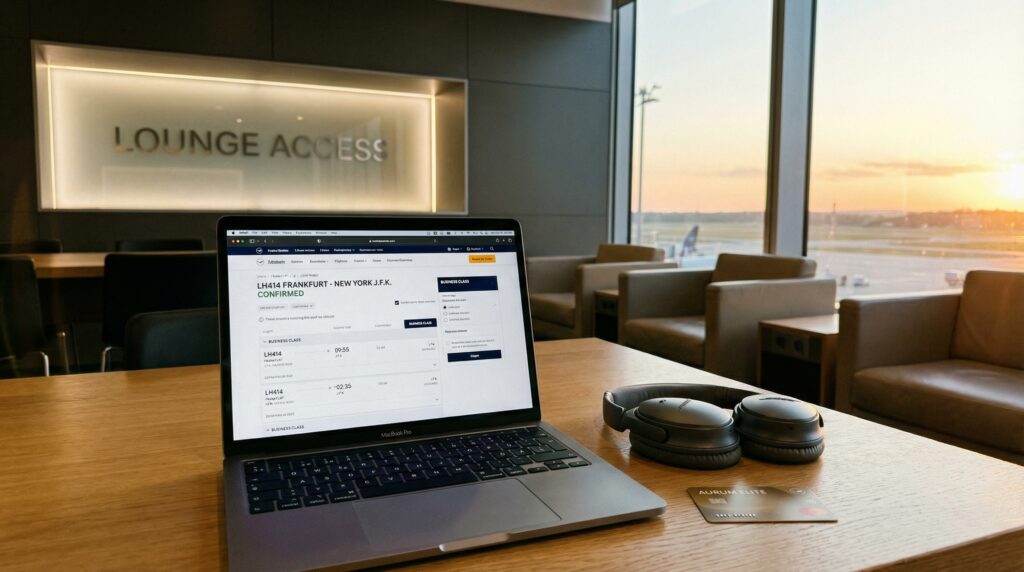
To effectively evaluate premium travel card plans in the current fiscal year, one must apply a “Net Effective Cost” (NEC) analysis. A premium plan is defined by an annual fee structure typically exceeding $395, which serves as a barrier to entry for a specific set of high-tier benefits that are non-cash in nature.
Multi-Perspective Explanation
From a Risk Management Perspective, a premium card is a primary insurance vehicle. For the frequent traveler, the value is not in the “points,” but in the “Trip Delay Reimbursement” and “Primary Rental Car Coverage.” These are secondary contracts that act as a hedge against the unreliability of commercial carriers. If a $550-per-year card covers two $300 hotel nights caused by flight cancellations, the card has paid for itself before a single reward point is redeemed.
From a Logistical Perspective, excellence is defined by “Time Recovery.” Features such as CLEAR Plus memberships, Global Entry credits, and specialized lounge networks (Centurion, Sapphire, Capital One) are designed to reduce the “Human Toll” of travel. For the professional traveler, the value of 30 minutes saved at an airport terminal is often higher than the monetary value of a cashback rebate.
From a Capital Allocation Perspective, these plans are “Prepaid Travel Credits.” Most top-tier cards now include a $200 to $400 annual travel credit that is applied automatically to bookings. This effectively lowers the “out-of-pocket” cost of the fee, provided the cardholder was already planning to spend that amount on travel.
Oversimplification Risks
A common error is the “Coupon-Book Fallacy,” valuing a card based on the aggregate sum of its disparate credits (e.g., $10 for Uber, $20 for digital subscriptions). If a cardholder has to change their organic behavior to “use up” a credit, the credit’s value should be discounted by at least 50% in the NEC calculation. True comparison requires looking at the “Uncluttered Yield”: the value derived without adding extra administrative work to the user’s life.
Contextual Background: The Sophistication of Travel Credit
The American travel credit market has transitioned through several distinct epochs. The Legacy Era (1980–2010) was defined by airline-specific loyalty. You held a card from a specific carrier to earn “Miles” that could only be used with that carrier. The logic was simple, but the liquidity was low.
The Transferable Era (2011–2021), sparked by the rise of Chase Ultimate Rewards and Amex Membership Rewards, introduced “Point Portability.” This allowed users to treat their points as a “Hub Currency,” moving them to whichever airline offered the best redemption on a specific day. This period saw a massive democratization of “First Class Travel” via point-hacking.
By 2026, we will have entered the Era of Integrated Logistics. Issuers have realized that “Points” are a liability on their balance sheets, so they are shifting toward “Tangible Utility.” We see cards that offer “Guaranteed Late Checkout,” “Automatic Room Upgrades,” and “Private Terminal Access.” The “Plan” has shifted from a way to pay for travel into a way to experience travel with less friction.
Conceptual Frameworks and Mental Models
1. The “Transfer Alpha” Model
This framework prioritizes “Hub Currencies” (Amex, Chase, Citi, Bilt, Capital One) over “End-Point Currencies” (Delta, Marriott, United). A hub currency has a “Redemption Ceiling” that is virtually unlimited because it can be converted into whichever partner offers a “Sweet Spot” redemption (e.g., using 50k points for a $4,000 flight).
2. The “Break-Even Velocity” Calculation
Calculate the total annual fee minus the “Hard Credits” (travel credits, hotel credits). The remaining balance is the “Service Tax.” Divide this tax by your “Expected Point Value” (usually 1.5 to 2.0 cents). If you don’t spend enough to earn that many points, the card is a net loss.
3. The “Lounge-to-Labor” Ratio
For those who travel for work, the airport lounge is a “Remote Office.” This model values lounge access at the cost of a high-end co-working day pass ($50). If you visit a lounge 12 times a year, that is $600 in value, which alone justifies most $550 annual fees.
Key Categories of Premium Architectures
| Category | Primary Strategic Focus | Key Trade-off | Ideal Use Case |
| The Ecosystem Anchor | Max flexibility; high-tier lounges. | High annual fee ($550+); complex credits. | Frequent, multi-airline travelers. |
| The “Lifestyle” Hybrid | Heavy multipliers on Dining/Groceries. | Restricted to a specific bank portal. | High-spenders who travel 2–3 times/year. |
| The Brand Loyalist | High-tier hotel/airline status included. | Points are “locked” to one ecosystem. | Those who stay 20+ nights at one chain. |
| The “Simple” Premium | High flat-rate earn (2x on everything). | Fewer “luxury” lifestyle perks. | Users who hate tracking categories. |
| The Corporate Crossover | Benefits for both personal and work. | High spend requirements for top perks. | Solo-preneurs and consultants. |
Detailed Real-World Scenarios and Decision Logic
The “Domestic Commuter”
A consultant flies once a week between two major hubs (e.g., ATL to ORD).
-
The Logic: They don’t need “Transfer Alpha”; they need “Lounge Proximity.”
-
The Decision: Prioritizing a card that owns the lounges in their specific terminal.
-
Failure Mode: Selecting a card with “Priority Pass” if their home airport only has airline-branded lounges that don’t accept it.
The “International Aspiration”
A couple saves for two years to fly business class to Japan.
-
The Logic: They need “Volume Earning” in a currency that transfers to Virgin Atlantic or ANA.
-
The Action: Selecting a card with a 4x or 5x multiplier on “Daily Spend” (Groceries/Dining) to accelerate point accumulation.
-
Second-Order Effect: The “Annual Fee” is irrelevant because the “Savings Alpha” on the $10,000 flight they book with points is massive.
Planning, Cost, and Resource Dynamics
The “Cost of Carry” for a premium travel card includes the fee, the “Credit Utilization Impact,” and the “Administrative Drag” of tracking credits.
2026 Premium Card Expense Mapping
| Component | Cost Range | Variability Factor |
| Gross Annual Fee | $395 – $695 | Tier of service |
| Opportunity Cost | 1% – 2% | Forgoing a flat-rate cashback card |
| Admin Time | 5 – 10 hours/year | Managing monthly/annual credits |
| Interest (APR) | 21% – 29% | Benchmark Prime Rate |
Tools, Strategies, and Support Systems
-
Award Aggregators: Tools like Point.me or Roame. Travel to find the highest-value transfer redemptions.
-
“Calendarized” Credit Tracking: Setting monthly reminders to use Uber or dining credits before they expire.
-
Status Matching: Using the mid-tier status provided by a card (e.g., Marriott Gold) to “match” into car rental or airline status.
-
Virtual Card Numbers: For booking at “non-chain” hotels to maintain security while traveling.
-
Retention Desk Tactics: Calling the issuer every 12 months to ask for a “Retention Offer” to offset the annual fee.
-
“Authorized User” Strategy: Adding a spouse for a reduced fee to double the lounge access and Global Entry credits.
Risk Landscape and Taxonomy of Failure Modes
-
“The Point Devaluation Cliff”: Holding 500k points in an airline program only for them to increase award prices by 30% overnight. Mitigation: Keep points in “Hub” accounts until the day of booking.
-
“The Credit Burn-out”: Paying $695 for a card and only using the $200 travel credit, leaving $495 in “unrecovered cost.”
-
“The Insurance Gap”: Assuming a card covers a specific risk (e.g., medical evacuation) when the fine print only covers “Trip Interruption.”
-
“The Utilization Spike”: Making a $10,000 travel purchase that puts the card at 90% of its limit, temporarily lowering your credit score.
Governance, Maintenance, and Long-Term Adaptation
A premium card requires a “Renewal Audit” 30 days before the annual fee hits.
-
Audit Triggers:
-
A change in your “Home Airport” hub airline.
-
A 20% increase in the annual fee.
-
The introduction of a “New Competitor” card with a higher welcome bonus.
-
-
Maintenance Checklist:
-
Confirm “Global Entry/TSA PreCheck” hasn’t expired.
-
Verify “Lounge Access” terms (many are moving to “Guest Fees”).
-
Audit “Category Spend” to ensure the multipliers still match your budget.
-
Measurement, Tracking, and Evaluation
-
Leading Indicators: “Net Effective Fee” (Annual Fee – Tangible Credits); “Point Earn Velocity” (Points earned per month).
-
Lagging Indicators: “Realized Cent-Per-Point” (Value of travel / Points used); “Lounge Visit Frequency.”
-
Documentation Examples:
-
The “Value Ledger”: A simple sheet tracking every time the card “saved” money (insurance claims, lounge meals, upgrades).
-
The “Transfer Map”: A list of which partners you actually use for redemptions.
-
Common Misconceptions and Oversimplifications
-
“The fee is too high”: For a frequent traveler, a $695 fee is often cheaper than paying for individual travel insurance and airport meals.
-
“Points are better than cash”: Only if you redeem them for at least 1.5 cents each. If you use them for “Amazon Shopping,” you are losing value.
-
“I can use my points for any flight”: Usually only if you book through the “Bank Portal,” which might be more expensive than booking direct.
-
“The Concierge is like a personal assistant”: In 2026, they mostly have access to the same apps (OpenTable/Resy) as you. Their power is limited to “Cardholder-only” blocks of tables.
-
“Authorized Users get all the same perks”: Often false. They usually get lounge access but not the annual travel credits or status upgrades.
-
“I should close the card if I don’t travel this year”: This can hurt your “Average Age of Accounts.” It may be better to “Downgrade” to a no-fee version.
Ethical and Practical Considerations
Premium travel cards are a product of “Interchange Dynamics.” High-income spenders are effectively subsidized by the fees merchants pay, which are often passed down as higher prices to all consumers. Practically, the “Best” card is one that respects your “Cognitive Load”—if a card requires too much work to extract value, it is not a luxury product; it is a second job. The most successful premium cardholders are those who find a plan that aligns with their existing habits, rather than one that forces them to adopt new ones.
Conclusion
Navigating premium travel card plans in 2026 is an exercise in “Systemic Optimization.” Success is not found in the initial sign-up bonus, but in the long-term “Net Effective Yield” of the benefits. For the disciplined traveler, these plans act as a buffer against the friction of global transit, providing a predictable layer of luxury and security in an increasingly volatile world. By treating the card as a logistical asset rather than a status symbol, the modern traveler transforms a financial obligation into a powerful tool for autonomy and ease.