
Best Concierge Services United States: 2026 Definitive Guide
The modern American service economy is increasingly defined by the commodification of time. As global logistical systems grow more complex and digital platforms more fragmented, a specialized tier of “lifestyle management” has emerged to serve a demographic that prioritizes efficiency and exclusive access over the labor of self-organization. The contemporary concierge is no longer merely a desk-bound figure in a luxury hotel lobby; it is a high-functioning nodal point in a global network, designed to mitigate the “friction of the mundane” and secure “unbuyable” opportunities.
In 2026, the value of these services is tethered to the concept of “Information Asymmetry.” While a standard consumer relies on public-facing search engines and booking platforms, a professional concierge operates within a parallel infrastructure of direct relationships, wholesale access, and proprietary data. The challenge for the sophisticated user lies in distinguishing between “Marketing Concierges”—often automated or script-based call centers bundled with mid-tier credit cards and “Architectural Concierges,” who possess the agency to intervene in complex supply chains of luxury and logistics.
This editorial pillar interrogates the structural mechanics of the elite service sector. We will examine the systemic evolution of concierge models, the mathematical justification for their high entry costs, and the risk-management frameworks required to utilize them effectively. This is intended as a definitive reference for those who view lifestyle management not as a luxury but as a strategic necessity for the preservation of personal and professional focus.
Understanding “best concierge services united states.”
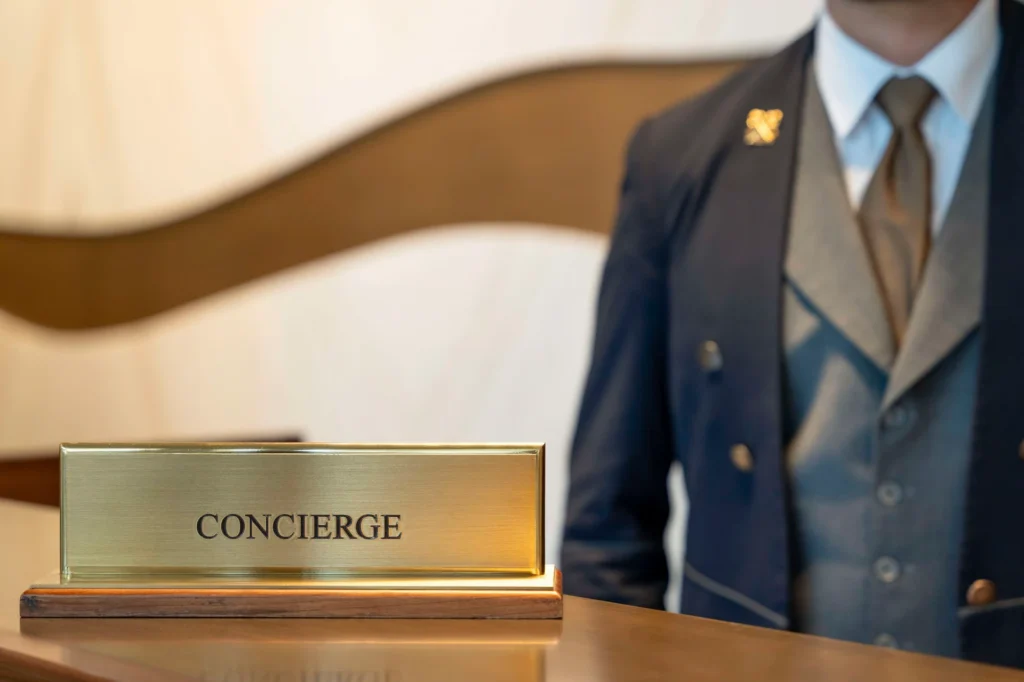
To evaluate the best concierge services in the United States requires a multidimensional analysis that looks past the superficial promise of “getting a table.” A world-class service is judged by its ability to resolve logistical paradoxes, situations where the market appears closed to the general public but remains open to those with the correct institutional keys.
Multi-Perspective Explanation
From a Logistical Perspective, a top-tier service acts as a “Buffer of Certainty.” In a world of overbooked airlines and sold-out venues, the concierge provides a redundancy layer. They do not merely book a flight; they monitor the flight’s status, identify secondary routing before a cancellation occurs, and possess the authority to secure hotel inventory that is “held back” for premium partners.
From a Socio-Economic Perspective, these services function as “Relationship Arbitrageurs.” The concierge industry is built on a foundation of reciprocity. A service in New York or Los Angeles maintains a high level of access because they provide consistent, high-spending, low-trouble patrons to local luxury merchants. The user is essentially paying for the “Social Credit” the concierge has spent years accumulating.
From a Psychological Perspective, the utility is found in the “Cognitive Offloading.” The mental load of planning a multi-city international itinerary or sourcing a rare collector’s item is significant. By outsourcing this labor, the user preserves their decision-making energy for high-stakes professional or creative endeavors.
Oversimplification Risks
A common misunderstanding is that a concierge is a “Discount Agent.” In reality, using a top-tier service often results in paying full market price or even a premium for the convenience of access. Furthermore, the belief that “AI Concierges” can currently replace human networks ignores the reality of “Offline Inventory,” the thousands of restaurant tables and hotel suites that are never listed on digital platforms and are only available via direct human-to-human negotiation.
Contextual Background: From Hotel Lobbies to Global Operating Systems
The term “concierge” originates from the French comte des cierges (keeper of the candles), referring to the official responsible for the needs of visiting nobles at medieval castles. By the 19th century, this role had transitioned into the grand hotels of Europe, eventually leading to the formation of Les Clefs d’Or (The Golden Keys), the international professional association that still sets the gold standard for hotel service today.
The systemic shift occurred in the late 1990s and early 2000s with the rise of “Lifestyle Management” firms. Companies like Quintessentially and Velocity Black (and later their acquisitions by larger financial entities) proved that the service was viable outside the hotel lobby. They decoupled the concierge from a physical building and turned it into a 24/7 global subscription model. By 2026, the marketwill haves bifurcated into “Generalist” services often bundled with premium credit cards and “Ultra-High-Net-Worth (UHNW) Boutiques,” which limit their membership to a few hundred individuals to ensure a nearly 1:1 agent-to-client ratio.
Conceptual Frameworks and Mental Models
1. The “Yield of Access” Model
This framework ranks a service based on its “Unlisted Inventory” capability. If a concierge can only book what the user can see on OpenTable or Expedia, their “Yield of Access” is zero. A top-tier service must demonstrate a “Positive Yield,” meaning it provides options that are invisible to the public internet.
2. The “Time-to-Resolution” Heuristic
For the busy professional, the value of a concierge is inversely proportional to the time it takes to get an answer. A service that takes 24 hours to research a request is often useless in a high-velocity environment. The mental model suggests: A concierge is a tool for speed, not just results.
3. The “Institutional Trust” Umbrella
This model views the concierge as a secondary “Identity.” When a concierge calls a restaurant on your behalf, they are lending you their institutional reputation. If the concierge is well-regarded, you are treated as a “Vetted Guest.” If the concierge is part of a low-tier mass-market service, you are treated as a “Standard Booking.”
Key Categories of Service Variations
| Category | Primary Focus | Best For | Trade-off |
| Financial/Credit Bundled | Travel and basic dining. | Casual travelers. | High latency; limited bespoke agency. |
| Boutique Lifestyle | High-end access/Events. | Socialites and Executives. | High annual membership fees ($5k+). |
| Travel Specialist | Hard-to-book lodging/logistics. | Global nomads. | Less utility for daily life tasks. |
| Medical/Security | Emergency evac/health access. | High-risk travelers. | Narrow focus on safety/health. |
| Corporate Concierge | Employee retention/gifting. | Large-scale organizations. | Less personalized for the individual. |
| Digital-First/Hybrid | Speed and app integration. | Tech-savvy affluent. | Less “Human-to-Human” relationship depth. |
Decision Logic: The “Frequency vs. Complexity” Matrix
If your needs are high frequency but low complexity (booking standard flights, flowers), a digital-first or credit-card-bundled service is sufficient. If your needs are low frequency but high complexity (finding a specific 1960s vintage car, arranging a private tour of the Vatican), you require a boutique service with dedicated human agents.
Detailed Real-World Scenarios and Decision Logic
The “Sold Out” Cultural Event
A client wants four tickets to a Broadway show or a major sports final that is officially sold out.
-
The Logic: The concierge does not look at Ticketmaster. They contact their “Secondary Market” network or utilize “House Seats” held back for sponsors.
-
The Decision: The user must decide if the “Premium of Access” (often 200% of face value) is worth the event.
-
Failure Mode: Expecting the concierge to find tickets at face value for a sold-out event.
The “Disrupted Itinerary”
A flight is cancelled at 11:00 PM in a foreign city during a storm.
-
The Action: The user bypasses the 200-person line at the airport and calls the concierge.
-
Outcome: The concierge secures a hotel room and a seat on a morning flight through a partner airline before the general public has even reached the front of the line.
-
Second-Order Effect: Preservation of the client’s physical and mental well-being for a meeting the following day.
Planning, Cost, and Resource Dynamics
The “Cost” of concierge services in the United States is increasingly structured as a tiered membership model.
Annual Resource Commitment Table
| Service Tier | Estimated Cost (Annual) | Deliverable Expectations |
| Tier 1 (Bundled) | $0 – $695 (as part of card fee) | Standard bookings; low bespoke capacity. |
| Tier 2 (Mid-Market) | $1,500 – $3,500 | 24/7 app + human support; some exclusive event access. |
| Tier 3 (Boutique) | $5,000 – $15,000 | Dedicated agent; high bespoke agency; global networking. |
| Tier 4 (UHNW) | $25,000+ | Full “Lifestyle Office” integration; medical and security layers. |
Tools, Strategies, and Support Systems
-
The “Profile Sync”: A proactive user provides a detailed “Preferences Document” (airline seats, dietary allergies, hotel floor preferences) to the concierge during onboarding to eliminate repetitive data entry.
-
Third-Party Booking Alerts: Utilizing tools that notify the concierge the moment a specific restaurant reservation opens up.
-
The “Shadow Itinerary”: Asking a concierge to plan a “Plan B” for complex travel (e.g., a secondary hotel in case of weather delays).
-
Wholesale Network Access: Leveraging the concierge’s membership in networks like Virtuoso or Traveller Made to secure free breakfasts and room upgrades.
-
Gifting Portals: Using the concierge to source, wrap, and deliver high-end gifts with a personal card, preserving the user’s time.
-
“Deep-Tissue” Research: Commissioning the concierge to find specific data (e.g., “Find the best private tutor for Mandarin in Dallas”) rather than just making a booking.
Risk Landscape and Taxonomy of Failure Modes
-
The “Service Lag” Gap: In periods of high demand (e.g., the Super Bowl), even the best services experience delays.
-
“Preferred Partner” Bias: Some concierges are incentivized to book specific hotels or airlines because of commission structures, which may not always align with the client’s best interest.
-
Data Security Vulnerability: Providing credit card details and personal travel habits to a third-party service creates a significant surface area for data breaches.
-
The “Over-Reliance” Trap: Becoming so dependent on a concierge that one loses the ability to manage basic logistics when the service is unavailable (e.g., in remote areas with no signal).
Governance, Maintenance, and Long-Term Adaptation
A concierge relationship is a “Managed Asset” that requires periodic review.
Adjustment Triggers
-
Travel Frequency Change: If you move from international travel to domestic, your service may need to change from a global firm to a localized specialist.
-
Response Decay: If the average response time from your agent increases by 50% over six months, it is a signal of “Scaling Issues” within the firm.
-
Annual Audit: Compare the “Value of Time Saved” and “Value of Upgrades Received” against the annual membership fee.
Measurement, Tracking, and Evaluation
-
Leading Indicators: “Agent Response Time”; “Accuracy of Initial Recommendations.”
-
Lagging Indicators: “Total Dollar Value of Perks/Upgrades”; “Success Rate of ‘Sold Out’ Requests.”
-
Documentation:
-
The “Upgrade Ledger”: Tracking the value of free breakfasts, spa credits, and room upgrades.
-
The “Bespoke Log”: Noting every time the concierge solved a non-standard problem (e.g., finding a local doctor).
-
Common Misconceptions and Oversimplifications
-
“The Concierge is my assistant.”:o, they are a network manager. They do not do your laundry or manage your email; they execute external transactions.
-
“They have a magic wand for everything”: Laws of physics and legalities still apply. They cannot make a plane fly in a hurricane.
-
“Credit card concierges are the best”: They are actually the “Entry Level” of the industry, often outsourced to third-party call centers.
-
“It’s only for celebrities”: The largest growth in the best concierge services in the United States market is from mid-career professionals and entrepreneurs.
-
“I can just use AI”: AI cannot call a restaurant manager at 5:00 PM and use a 10-year friendship to “squeeze in” a table of four.
-
“They charge a markup”: Most reputable services charge a flat membership fee; markups on bookings are rare among the elite firms.
Conclusion
The evolution of the concierge industry reflects a broader shift toward “Strategic Outsourcing” in the American lifestyle. As the world becomes more digitally accessible yet logistically congested, the human element of “Relationship Management” remains the ultimate luxury. Success in utilizing a concierge service is found not in the prestige of the membership but in the clarity of the partnership. By treating the concierge as a nodal point in your personal infrastructure governed by clear expectations and proactive communication, you can reclaim the one resource that no amount of money can truly create: more time.