
Best Corporate Credit Plans: The 2026 Reference to Spend on Infrastructure
The architecture of institutional liquidity has undergone a profound structural shift as we move deeper into 2026. For the modern enterprise, whether a lean, high-growth startup or a decentralized multinational, the credit instrument has evolved from a simple T&E (Travel and Entertainment) reimbursement tool into a programmable financial engine. The era of the “static card” is effectively over, replaced by a sophisticated layer of software-led credit that integrates directly with the company’s treasury, procurement, and accounting stacks.
In this environment, selecting a credit framework is no longer merely about comparing interest rates or rewards points. It is about “Operational Velocity.” A firm’s ability to issue instant virtual cards for SaaS subscriptions, set granular limits on department-level marketing spend, and automate the grueling process of receipt reconciliation is what separates an agile organization from one bogged down by administrative debt. This maturation of the market reflects a broader demand for real-time visibility and a total rejection of the “end-of-month” accounting surprise.
However, the proliferation of “Spend Management” platforms and legacy banking refreshes has created a landscape of immense complexity. Selecting the right path requires an analytical approach that accounts for the “Hidden Friction” of implementation, the legal nuances of corporate versus personal liability, and the long-term scalability of a plan’s API infrastructure. This pillar article serves as an editorial deep-dive into the mechanics of corporate credit, prioritizing structural integrity and practical logic over the transient hype of marketing headlines.
Understanding “best corporate credit plans.”
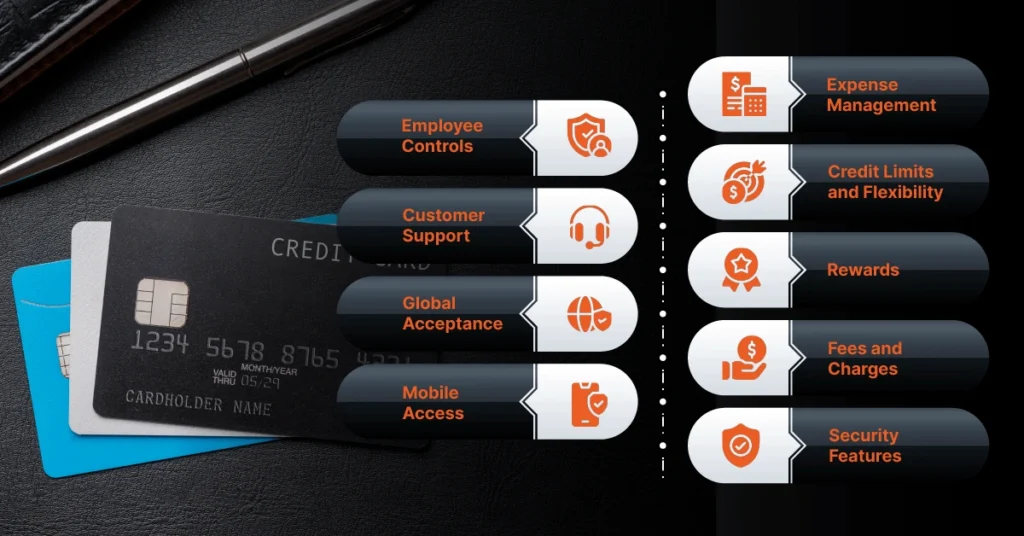
To fundamentally define the best corporate credit plans in 2026, one must apply a “Systems-Thinking” lens. A corporate plan is a legal and technical contract that defines how an entity accesses short-term unsecured capital and how the data resulting from that access is metabolized by the organization.
Multi-Perspective Explanation
From an Accounting Perspective, excellence is found in “Zero-Touch Reconciliation.” If a plan requires employees to manually attach physical receipts or wait weeks for an audit, the “Human Cost of Capital” becomes prohibitively high. A top-tier plan provides “Direct-to-Ledger” synchronization, where transactions are matched to digital invoices and categorized by department in real-time.
From a Treasury Perspective, these plans are “Float Management” instruments. By utilizing the 30-to-45-day grace period between a purchase and the statement due date, a firm can maintain its primary cash reserves in high-yield vehicles for longer. This “Working Capital Optimization” is a secondary, often overlooked yield that can exceed the value of the actual rewards points for high-volume firms.
From a Legal Perspective, the focus is on “Total Liability Severance.” Unlike small business cards, true corporate plans remove the “Personal Guarantee” requirement. This protects the individual officers from the firm’s insolvency and allows for uncapped credit limits based on the company’s audited financials and monthly recurring revenue (MRR) rather than an individual’s credit score.
Oversimplification Risks
A common error is the “Nominal Yield Mirage,” focusing on a 2% “headline” cashback rate while ignoring the 3% foreign transaction fees on a global software stack. Furthermore, many leadership teams overlook “Administrative Drag.” If a card saves $50,000 in cashback but requires three full-time employees to manage its complex reconciliation process, the net value to the organization is negative.
The Industrialization of Liquidity: A Contextual History
The trajectory of corporate credit has moved through three distinct eras. The Executive Era (1970–2005) was defined by the “Green Card” archetype, a status symbol intended for travel for a firm’s highest earners. Credit was manual, reporting was paper-based, and the “Business Plan” was essentially a personal card with a slightly higher limit and no real-time control.
The FinTech Disruptor Era (2006–2022) saw the rise of platforms that challenged legacy banks by introducing “No-Personal-Guarantee” cards for venture-backed startups. This era shifted the focus from T&E to “Operational Spend” (SaaS, AWS, Google Ads). This was the birth of the “Virtual Card” single-use numbers that could be issued instantly to employees for specific projects.
By 2026, we will have entered the Era of Programmable Liquidity. The corporate credit card is now a “Financial Operating System.” We see plans that offer “Credit-as-a-Service,” where the card limit is tied dynamically to the firm’s real-time bank balance. The “Plan” is no longer a static agreement but a fluid, data-driven partnership that expands and contracts with the firm’s real-time health.
Conceptual Frameworks and Mental Models
1. The “Administrative-to-Reward” (ATR) Ratio
This model measures the labor cost of managing a card program against the monetary yield of its rewards. If a plan yields $10,000 in cash back but requires 80 hours of manual reconciliation across the finance team (valued at $100/hr), the ATR is 1.25. A plan with an ATR > 1.0 is a “Value-Destructive Asset.”
2. The “Vertical Spend” Heuristic
This framework categorizes spend into “Verticals” (e.g., Marketing, Shipping, Travel, IT). An optimized portfolio does not seek a single card for all spend; it seeks “Vertical Dominance.” A firm may use one card for its $2M annual Google Ads spend to capture a 3% multiplier, and a separate “Spend Management” card for all incidental employee expenses to capture automation value.
3. The “Credit-to-Revenue” Elasticity Model
For scaling firms, the most important feature is the “Credit Ceiling.” This model evaluates how quickly an issuer increases limits in response to revenue growth. A card that keeps a firm’s limit at $100,000 while the firm’s monthly spend grows to $400,000 creates a “Growth Bottleneck” that can stall operations during critical expansion phases.
Key Categories of Corporate Architectures
| Category | Primary Strategic Advantage | Key Operational Trade-off | Representative Structure |
| The Yield Optimizer | High multipliers (3-5%) on specific nodes. | Complex reconciliation often requires PG. | Legacy “Points” Cards |
| The Spend Management Stack | Built-in SaaS for limit control & audit. | Rewards are often lower than “T&E” cards. | Brex / Ramp / Airbase |
| The Global Giant | Deep international reporting; localized FX. | High spend requirements; low rewards. | Amex Corporate / Citi Commercial |
| The Flat-Rate Anchor | Simplicity: 1.5-2% yield on every dollar. | No specialized category bonuses. | Capital One / Chase Ink |
| The Industry Specialist | Bespoke perks (e.g., fuel/inventory). | Highly illiquid rewards outside the niche. | Fleet Cards / Amazon Business |
Detailed Real-World Scenarios and Decision Logic

The “Digital Agency” Scale-Up
An agency spends $250,000/month on Meta Ads and $30,000 on software.
-
The Logic: They are hit by “Multiplier Caps.” Most cards cap their 4x bonuses at $150k per year.
-
The Decision: Deploying a “Laddered Stack.” Card A is used until the cap is hit, then Card B (a 2% flat-rate corporate card) captures the remainder.
-
Failure Mode: Sticking with a single card, resulting in an effective yield drop from 4% to 1% after the first quarter.
The “Remote-First” Consultancy
A firm with 100 employees across 15 countries.
-
The Logic: They need “Employee Agency” without “Risk Exposure.”
-
The Action: Adopting a Spend Management Stack. Every employee receives a virtual card with a “Hard Limit” of $1,000/month for training and equipment.
-
Second-Order Effect: The finance team saves 40 hours a week because the system forces categorization at the moment of purchase.
Planning, Cost, and Resource Dynamics
The “Total Cost of Ownership” (TCO) of a corporate credit plan includes the annual fee, the “FX Markup,” and the “Audit Overhead.”
2026 Corporate Card TCO Mapping (Estimated Range)
| Expense Layer | Range (Small/Mid) | Range (Enterprise) | Variability Factor |
| Direct Annual Fee | $0 – $1,500 | $5,000 – $25,000 | Tier level / Seat count |
| FX / Cross-Border | 0% – 3% | Negotiated | International volume |
| Audit/Reconcile Labor | $2,000 / mo | $10,000 / mo | ERP Integration depth |
| Opportunity Cost | Variable | Variable | Cash sweep rates |
Tools, Strategies, and Support Systems
-
ERP “Deep-Link” Integrations: Direct, real-time feeds into NetSuite, SAP, or Sage Intacct to eliminate the “CSV Export” cycle.
-
Virtual Card “Silos”: Generating unique card numbers for every SaaS subscription to prevent “unauthorized rebilling” and simplify vendor management.
-
AI Receipt Matching: Mobile-first systems that text the employee immediately after a swipe, asking for a photo of the receipt to be matched via OCR.
-
“Retention Desk” Strategies: Calling issuers annually to request fee waivers or “Spend Challenges” to earn extra points based on historical volume.
-
Multi-Rail Redundancy: Holding cards with different issuers (e.g., one Visa, one Amex) to ensure “Operational Continuity” during network outages or fraud freezes.
-
Automatic “Sweep” Programs: Moving cash-back rewards into a high-yield treasury account automatically to maximize interest on rewards.
Risk Landscape and Taxonomy of Failure Modes
-
“The Personal Guarantee Trap”: A mid-market firm growing rapidly but failing to transition to corporate liability, leaving the CEO’s personal credit exposed to million-dollar liabilities.
-
“Shadow Spend”: Employees using corporate cards for “Grey-Market” SaaS or personal items that go unnoticed due to poor visibility into line-item data.
-
“The SaaS Leak”: Unused subscriptions continue to bill a “Master Card” because there was no “Virtual Card Silo” to kill the specific payment.
-
“The Velocity Lockout”: An issuer’s fraud algorithm freezes a card during a critical, high-stakes event because the spend “Velocity” deviated from the historical norm.
Governance, Maintenance, and Long-Term Adaptation
A corporate credit plan is not a “Set-and-Forget” asset. It requires a Quarterly Governance Audit.
-
Adjustment Triggers:
-
Headcount reaching a “Tier 2” threshold (e.g., 50 employees).
-
Shift in spend Vertical (e.g., moving from “Marketing-heavy” to “Inventory-heavy”).
-
Net Margin compression requiring a “Cost-Savings” review of annual fees and FX markups.
-
-
Maintenance Checklist:
-
Verify all “Offboarded Employees” have had their digital cards burned.
-
Check the “Effective Multiplier” (Total Rewards / Total Spend).
-
Audit the “Redemption Policy” to ensure no tax liabilities are being created by improper use of points.
-
Measurement, Tracking, and Evaluation
-
Leading Indicators: “Days to Reconcile” (How long after month-end is the ledger closed?); “Multiplier Efficiency” (What % of spend earned >1x?).
-
Lagging Indicators: “Net Recovery” (Total rewards minus Fees); “Employee Compliance Rate” (What % of transactions have matched receipts?).
-
Documentation Examples:
-
The “Spend Policy” Document: A living document outlining exactly what can and cannot be charged.
-
The “Multiplier Ladder”: A simple sheet showing which card to use for which vendor category.
-
Common Misconceptions and Oversimplifications
-
“Corporate cards don’t affect my personal credit”: Generally False for small businesses. Most still “Pull” personal credit during the application.
-
“Points are tax-free for the business”: False. They are technically “Rebates” that reduce the “Deductible Cost” of the expense.
-
“I need a 750+ score to get a corporate card”: False. FinTech-led plans look at your “Bank Balance” or MRR rather than your “Credit Score.”
-
“Closing a card ruins the company’s score”: Less true for corporate accounts, as they are not calculated on the same “Average Age” metrics as personal reports.
-
“Annual fees are always bad”: False. A $500 fee that provides $5,000 in automation value is a profit-generating asset.
-
“The Concierge can book a sold-out restaurant”: False. In 2026, they will use the same APIs (OpenTable/Resy) that you do.
Conclusion
The selection of a corporate credit framework is an exercise in “Operational Architecture.” There is no single “best” plan; there is only a “best-fit” stack for a firm’s specific metabolic rate. Success is defined by the absolute minimization of “Administrative Drag” and the surgical capture of “Interchange Margins.” By treating the corporate card as a programmable node within the broader financial stack, the modern enterprise transforms a simple payment tool into a high-alpha engine of growth and clarity.