How to Reduce Credit Utilization Costs: The 2026 Master Guide
The mechanics of modern credit are governed by a metric that is often more influential than the absolute dollar amount of one’s debt: the utilization ratio. While most consumers focus on the nominal interest rate, the “cost” of credit utilization is actually a multifaceted burden that includes score-based premium pricing, credit limit suppression, and the compounding drag of high revolving balances. In 2026, when credit monitoring is instantaneous and algorithmic, a high utilization rate acts as a persistent signal of financial volatility to lenders, regardless of a borrower’s actual net worth.
Managing this ratio is not merely a matter of paying down balances. It is a structural challenge that requires coordinating the timing of payments with the specific “reporting dates” of various financial institutions. The disconnect between when a consumer pays their bill and when a bank reports that balance to a credit bureau creates a lag, a data-ghost that can keep utilization costs artificially high even for those who pay their balances in full every month.
This editorial pillar interrogates the systemic methods required to neutralize these expenses. By deconstructing the “Utilization-Score Feedback Loop” and applying “Payment Velocity” strategies, we can establish a rigorous framework for maintaining a prime credit profile. To understand how to reduce credit utilization costs is to move beyond the reactive cycle of debt and toward an architectural mastery of how one’s financial data is packaged, reported, and priced by the global credit bureaus.
Understanding “how to reduce credit utilization costs.”

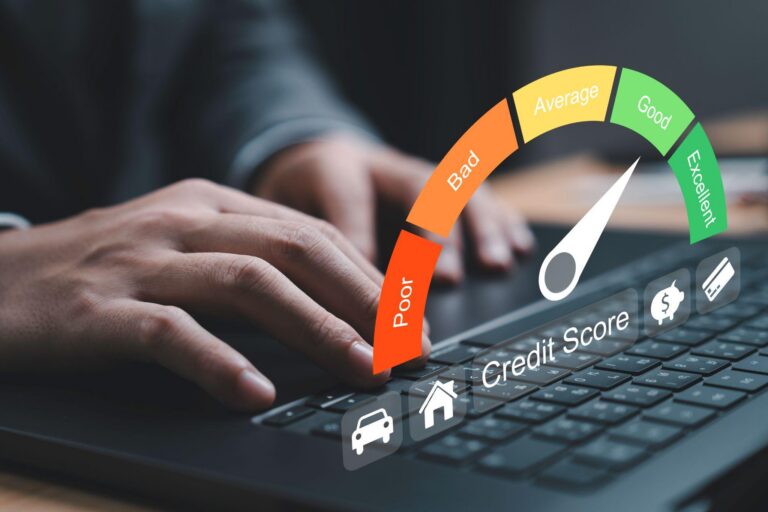
The term “cost” in this context refers to both direct financial interest and the indirect “opportunity cost” of a lower credit score. When a consumer carries a balance exceeding 30% of their available limit, the VantageScore and FICO algorithms interpret this as a high-risk behavior. This leads to a lower score, which in turn triggers higher interest rates on future loans, the true “hidden” cost of high utilization.
Multi-Perspective Explanation
From an Algebraic Perspective, utilization is a simple fraction: (Total Revolving Balances) / (Total Credit Limits). To lower the cost, one must either decrease the numerator (the debt) or increase the denominator (the limits). Sophisticated planners often focus on the denominator because it allows for higher spending capacity without the immediate requirement of liquidating cash assets.
From a Temporal Perspective, the “Reporting Date” is the only date that matters. If you spend $5,000 on a card with a $10,000 limit and pay it off on the “Due Date,” your utilization is 0% in your mind. However, if the bank “Snaps” your balance on the “Statement Closing Date” (usually 21-25 days before the due date), they report a 50% utilization rate to the bureaus. For that month, you are priced as a high-risk borrower.
From a Strategic Perspective, reducing utilization is about “Limit Dispersion.” Concentrating spending on a single card, even if that card has a high limit, creates a “Per-Card Utilization” red flag. Distributing that same spend across four cards lowers the perceived risk and the subsequent cost of credit.
Oversimplification Risks
A common misunderstanding is that utilization has a “memory.” While some newer models (like FICO 10T) track trends, traditional models only care about the most recent reported snapshot. This is a double-edged sword: you can fix your utilization cost in 30 days, but you can also ruin it in 30 minutes with a single large purchase.
Contextual Background: The Rise of Real-Time Risk Modeling
The relationship between utilization and cost has evolved from a monthly check-in to a high-frequency surveillance state. In the Pre-Digital Era (1970s–1990s), credit reports were updated sporadically. A high balance might not even be reflected in a score for several months. Lenders operated on “Lagging Indicators,” and consumers had more room for error.
The FICO 8 Revolution (mid-2010s) cemented utilization as roughly 30% of the total score. This created the “30% Rule,” a heuristic that has since become the standard advice for anyone seeking to minimize credit costs. However, in 2026, even 30% is viewed as aggressive by “Ultra-Prime” lenders who prefer to see utilization under 5%.
Today, we occupy the Trended Data Era. Modern scoring models look at whether your utilization is “Expanding” or “Contracting” over a 24-month window. It is no longer enough to have low utilization today; you must demonstrate a “Structural Pattern” of low utilization to access the lowest possible capital costs.
Conceptual Frameworks and Mental Models
1. The “Reporting Snag” Mental Model
This model treats the credit bureau as a photographer taking a single, unannounced photo of your credit report once a month. You don’t know exactly when the photo will be taken, but you know it will happen near the statement’s close. To reduce costs, the “Stage” must be set (balance paid) before the photographer arrives.
2. The “Denominator Expansion” Strategy
This framework views the credit limit not as a license to spend, but as a “Safety Buffer.” By requesting “Credit Limit Increases” (CLIs) every six months without increasing spending, the denominator grows. This creates a “Natural Insulation” against utilization spikes, lowering the cost of credit through pure structural volume.
3. The “AZEO” Framework (All Zero Except One)
This is a sophisticated model for those preparing for a major loan (mortgage or auto). The goal is to report $0 balances on every revolving account except one, which reports a tiny balance (less than 1% of its limit). This signals to the algorithm that you are an active but extremely low-risk user, maximizing the score and minimizing the loan’s interest rate.
Key Categories of Utilization Mitigation
| Strategy | Primary Mechanism | Strategic Benefit | Risk Factor |
| Pre-Statement Payment | Paying balance before the close date. | Reports 0-1% utilization. | Requires high liquidity. |
| Credit Limit Increase | Requesting a higher limit via app/phone. | Expands the denominator. | Potential “Hard Inquiry” pull. |
| New Account Opening | Adding a new card to the profile. | Increases total available credit. | Lowers the average age of accounts. |
| Debt Consolidation | Moving revolving debt to a term loan. | Utilization drops to 0% instantly. | Re-spending on the empty cards. |
| Balance Dispersion | Moving spend across multiple cards. | Avoids “Per-Card” triggers. | Harder to track and manage. |
| Authorized User (AU) | Piggybacking on a high-limit account. | Immediate limit boost. | “Shared Liability” risk. |
Detailed Real-World Scenarios and Decision Logic
The “Big-Ticket” Purchase Prep
A consumer needs to buy a $4,000 HVAC system on a credit card, but is applying for a mortgage in two months.
-
The Logic: Charging $4,000 on a $5,000 limit card will result in an 80% utilization report, likely dropping the credit score by 40–80 points and increasing the mortgage rate by 0.25%.
-
The Action: The consumer makes the purchase but pays it off within 48 hours—long before the statement closes.
-
Second-Order Effect: The bank sees the spend (earning rewards), but the credit bureau never sees the debt. The mortgage rate remains at the prime level.
The “Limit Increase” Ladder
A user has $10,000 in total credit and typically spends $3,000 a month (30% utilization).
-
The Logic: They are at the “Cost Threshold” where their score is being suppressed.
-
The Decision: Instead of spending less, they request a limit increase on their three main cards. They are granted a total of $30,000 in new limits.
-
Outcome: With $3,000 spend on a $40,000 limit, their utilization is now 7.5%. Their score rises, and the “Cost” of their next car loan drops significantly.
Planning, Cost, and Resource Dynamics

The “Cost” of reducing utilization is primarily the “Opportunity Cost” of your liquid cash.
2026 Utilization Optimization Matrix
| Activity | Time Investment | Monetary Cost | Efficiency |
| CLI Request | 5 Minutes | $0 | High (Denominator) |
| Pre-Paying | 10 Minutes / Month | Opportunity cost of cash | Extreme (Numerator) |
| AU Addition | 15 Minutes | $0 (if family) | Moderate (Variable) |
| Consolidation Loan | 2 Hours | Loan Origination Fees | High (Structural) |
Tools, Strategies, and Support Systems
-
Statement Date Alerts: Setting calendar reminders for the closing date of every card, not just the due date.
-
Micropayments: Making weekly payments rather than monthly ones to keep the “Average Daily Balance” and reported balance consistently low.
-
The “CLI Calendar”: A log to track when you last requested a limit increase (usually every 181 days for most major issuers).
-
Authorized User Status: Utilizing a spouse or parent’s high-limit, low-balance account to “lend” you their denominator.
-
0% APR Personal Loans: Using a fixed-term loan to wipe out revolving balances. In the eyes of the FICO algorithm, installment debt (loans) is far less “costly” than revolving debt (cards).
-
Business Credit Cards: Most business cards (except Capital One and Discover) do not report to personal credit bureaus. Moving large business expenses here keeps personal utilization at 0%.
-
“Stop-Gap” Credit Lines: Services that provide high-limit lines of credit specifically designed to serve as a utilization buffer.
Risk Landscape and Taxonomy of Failure Modes
-
“The Spending Trap”: Increasing your credit limit and then using that space to buy things you can’t afford. This leads to a higher absolute debt load.
-
“The Hard Pull Cascade”: Applying for five new cards to increase your limit, which results in five hard inquiries and a lower “Average Age of Accounts,” potentially hurting the score more than the utilization helps it.
-
“The Balance Chase”: When you pay down a card, the bank simultaneously lowers your limit becauseit wantst to reduce their own exposure. This is common during economic downturns and keeps your utilization high despite your payments.
-
“The Joint-Account Liability”: If you are an authorized user on someone else’s account and they max out the card, your score will plummet alongside theirs.
Governance, Maintenance, and Long-Term Adaptation
Maintaining low utilization costs requires a “Quarterly Credit Audit.”
-
Adjustment Triggers:
-
Any individual card utilization exceeding 20%.
-
Total aggregate utilization exceeding 10%.
-
A significant purchase (over $1,000) is planned for the next 60 days.
-
-
Layered Maintenance Checklist:
-
Verify “Statement Closing Dates” (these can shift by 1–2 days).
-
Check for “Auto-Limit Increases” from issuers.
-
Ensure no “Zombie Cards” have been closed for inactivity (losing that denominator).
-
Measurement, Tracking, and Evaluation
-
Leading Indicators: “Total Available Credit Trend”; “Weekly Balance-to-Limit Ratio.”
-
Lagging Indicators: “Monthly Credit Score Snapshot”; “Interest Charges on Statement.”
-
Documentation Examples:
-
The “Utilization Spreadsheet”: A simple table tracking [Balance] / [Limit] for every card on the 1st of every month.
-
The “CLI History”: A log of [Date] | [Issuer] | [Old Limit] | [New Limit] | [Result].
-
Common Misconceptions and Oversimplifications
-
“Carrying a small balance helps your score”: False. This is a persistent myth. You do not need to pay interest to have a high score. You only need to report a balance, which can be paid in full immediately after the statement closes.
-
“30% is the goal”: No. 30% is the “Failing” grade for premium credit. 1% to 9% is the “Honors” grade.
-
“Closing a card I don’t use will help”: Almost always false. Closing a card removes its limit from your denominator, which increases your utilization.
-
“I paid it off, so my score should go up today.”: False. It takes until the next “Reporting Cycle” (up to 30 days) for the bureau to see the update.
-
“My limit is my budget”: A dangerous conflation. Your budget is based on income; your limit is an abstract risk measurement.
-
“Checking my utilization hurts my score.”: No. “Soft Inquiries” through apps have no impact on your score or utilization.
-
“Total utilization is all that matters”: Partially false. Lenders look at both “Aggregate Utilization” and “Individual Card Utilization.” One maxed-out card can hurt you even if your total utilization is low.
Ethical and Practical Considerations
The structure of credit utilization presents a “Complexity Tax” on the consumer. Those who have the time and financial literacy to “game” the reporting dates are rewarded with lower interest rates, while those who pay their bills traditionally—on the due date—may be penalized. Practically, the most effective way to reduce credit utilization costs is to treat credit as a tool for “Data Transmission” rather than a source of “Spending Power.” Ethically, the system prioritizes those with higher liquidity, as the ability to “pre-pay” requires a cash buffer that many working-class individuals lack.
Conclusion
Mastering the mechanics of credit utilization is an essential skill for the modern financial strategist. It is a move away from the passive “debtor” mindset and toward the “capital manager” mindset. By understanding the reporting snag, aggressively expanding the denominator, and utilizing temporal arbitrage through pre-payments, an individual can essentially “opt out” of the high costs associated with credit usage. In 2026, your utilization ratio is a public statement of your financial discipline; ensuring that statement is one of stability is the key to accessing the world’s most competitive capital.