Luxury Dining Rewards USA: The 2026 Definitive Strategy Guide
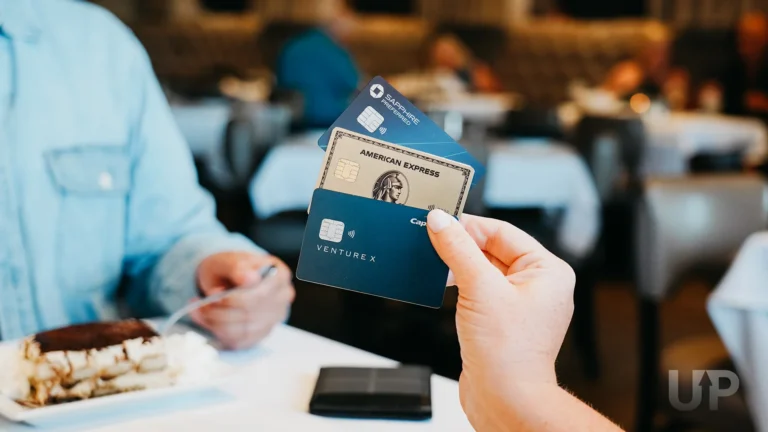
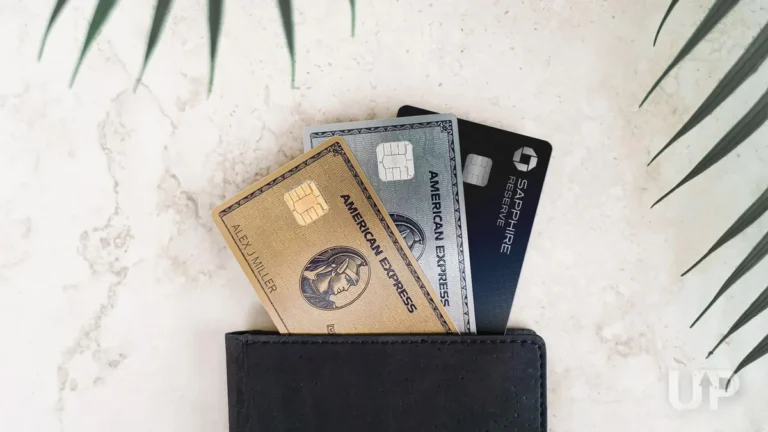
The intersection of high-end gastronomy and financial loyalty structures in the United States has moved beyond the era of simple point-multipliers. As the “experience economy” matures, the mechanism of the restaurant reward has transformed into a sophisticated tool for access, curation, and logistical bypass. In 2026, a high-spending diner is no longer merely looking for a 4% rebate on a Michelin-starred meal; they are seeking a structural advantage in a market where the primary constraint is no longer capital, but the availability of inventory, the “unbuyable” table.
This shift reflects a broader systemic change in how luxury is consumed. The democratization of credit card perks has flooded traditional lounge and travel networks, leading the most discerning consumers to seek refuge in the culinary arts, where the human element remains a non-fungible barrier to entry. Consequently, the major financial players have pivoted, acquiring reservation platforms and establishing direct-to-chef relationships to provide a layer of service that acts as an invisible hand for their most valued clients.
Mastering this environment requires an analytical understanding of how the various loyalty ecosystems, bank-led, brand-led, and independent, interact with one another. It demands a move away from passive earning toward a proactive strategy of “Access Arbitrage.” This editorial pillar deconstructs the architecture of the modern American dining reward, examining the mathematical reality of point valuations alongside the qualitative reality of preferred seating, chef’s table exclusions, and the psychological impact of being a “vetted” guest in a high-demand environment.
Understanding “luxury dining rewards usa”
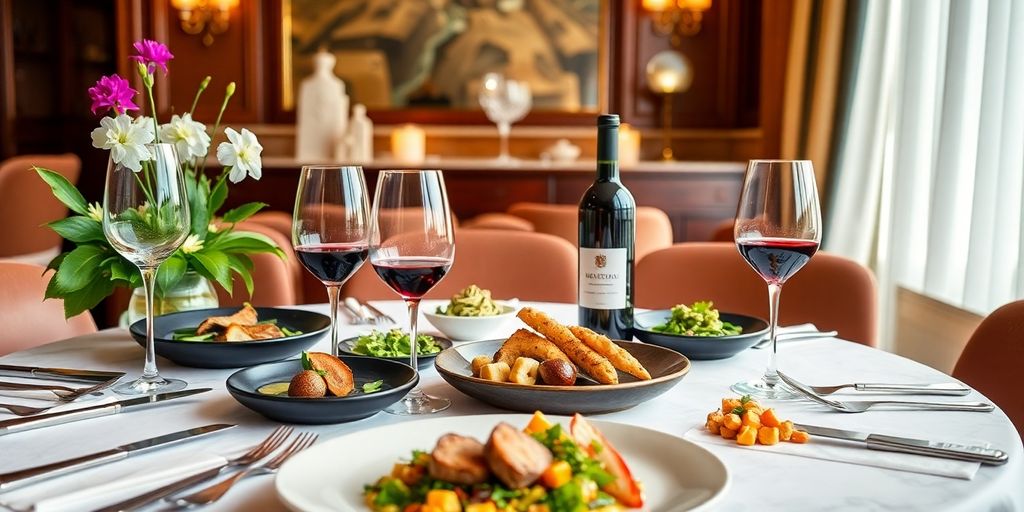
To understand the current state of luxury dining rewards in the USA, one must view the restaurant bill not as a final cost, but as a transaction occurring across multiple parallel value-capture systems. It is an intricate dance between the diner’s liquid capital, the bank’s interchange fees, and the restaurant’s need for predictable, high-value patrons.
Multi-Perspective Explanation
From a Structural Perspective, these rewards are a form of “Vertical Integration.” By owning or partnering with platforms like Resy or Global Dining Network, issuers can see exactly where, when, and how much their clients are spending. This data is more valuable than the interest on a loan; it allows the issuer to build a “Lifestyle Profile” that predicts future travel and luxury purchases. The reward is the incentive offered to the consumer to keep this data stream flowing within a specific ecosystem.
From an Operational Perspective, a restaurant views these programs as a “Filter of Reliability.” In an industry with razor-thin margins and high “no-show” risks, a guest coming through a premium rewards channel is a lower-risk asset. These guests are often “vetted” by their creditworthiness and are more likely to spend on high-margin items like wine and tasting menu upgrades.
From a Behavioral Perspective, the reward acts as a “Nudge.” While a 5x multiplier on a $400 dinner seems like a significant return, it often encourages “induced spend,” the choice to go out more frequently or to more expensive venues than one would if paying with cash. The “luxury” component here is as much about the psychological validation of the “perk” as it is about the actual financial rebate.
Oversimplification Risks
A significant risk in this space is the “Point-Value Trap.” Consumers often focus on the headline multiplier (e.g., “4x points”) without considering the “transferability” of those points. Four points in a closed system with a fixed 1-cent value are worth less than three points in an open system that allows transfers to international airlines at a 2-cent valuation. Furthermore, focusing solely on the financial reward ignores the “Opportunity Cost of Access.”Getting a 5% rebate on a mediocre meal is a net loss compared to getting a 1% rebate at a restaurant that provides a once-in-a-lifetime experience.
Contextual Background: The Evolution of Gastronomic Loyalty
The history of dining rewards in America began with the “Diners Club” in 1950, which was less about rewards and more about the convenience of not carrying cash. For decades, the “Corporate Card” was the primary driver of high-end restaurant volume, with rewards being secondary to the ease of expense reporting.
The landscape shifted in the 2010s with the “Sapphire Effect.” Issuers realized that food was the ultimate “Daily Engagement” category. Travel happens twice a year; dining happens three times a week. This led to an aggressive “Points War” centered on restaurants.
In 2026, we have moved into the “Access Era.” The value has migrated from the points back to the table. As top-tier restaurants in cities like New York, Charleston, and San Francisco become increasingly difficult to book, the “Reward” is now the “Priority Booking Window.” We are seeing a return to the “Keeper of the Keys” model, where your credit card status serves as a digital letter of introduction to the country’s most exclusive dining rooms.
Conceptual Frameworks and Mental Models
1. The “Experience-Adjusted ROI.”
This framework moves beyond simple math to include qualitative utility.
“Access Value” is the hypothetical dollar amount you would have paid on a secondary market (like a reservation bot or concierge) to get the table. “Amenities” include the value of a glass of champagne or a kitchen tour provided specifically because of your loyalty tier.
2. The “Ecosystem Velocity” Model
This model assesses how quickly points can be earned and burned within a specific lifestyle silo. If you earn points at a restaurant and can immediately use them to offset a hotel stay the next week, the “velocity” is high. If the points sit in a stagnant account for a year, their value is eroded by “Reward Inflation,” the tendency for issuers to increase the point-cost of rewards over time.
3. The “Platform Monopoly” Heuristic
This is a risk-assessment model. If one reservation platform (e.g., Resy) controls 80% of the restaurants you love, your “Loyalty Portfolio” should be anchored by the card issuer that owns or has the deepest integration with that platform. Relying on a card with a high multiplier but no platform integration leaves you with points but no seat.
Key Categories and Market Variations
| Category | Primary Benefit | Target Audience | Trade-Off |
| The Points-Heavy Generalist | 4x-5x on all dining. | High-frequency casual-to-fine diners. | No “Access” or “Concierge” layer. |
| The Access Specialist | Early booking; “Held” tables. | The “Must-Eat-There” enthusiast. | Lower base earning rates. |
| The Lifestyle Bundle | Monthly statement credits. | The disciplined budgeter. | High annual fees; requires “Coupon Tracking.” |
| The Brand Loyalist | Hotel/Airline status via dining. | The global traveler. | Points are “Locked” into one brand. |
| The Independent App | Cashback on “Off-Peak” times. | The value-seeking foodie. | Limited to “participating” restaurants. |
Decision Logic: The “Geography of Taste”
A diner in New York City has a different optimal strategy than one in a secondary market like Nashville. In NYC, where the “Table Scarcity” is extreme, an Access-based card is the priority. In a market where tables are easier to get, a Points-Heavy Generalist card that maximizes pure financial return is the smarter play.
Detailed Real-World Scenarios
The “Last-Minute” Power Dinner
A professional needs to host a client at a specific “no-reservations-available” steakhouse in Chicago.
-
The Logic: The user utilizes a card-integrated “Notify” feature that alerts them to a cancellation 30 seconds before it goes public.
-
The Decision: Paying the $20 “cancellation fee” insurance to hold the table.
-
Outcome: The “Social Capital” gained from securing the table outweighs the $40 in points earned.
The “Induced Spend” Failure
A card offers “10% back” at a specific luxury dining group.
-
The Constraint: The user spends $500 on a meal they didn’t particularly want just to “save” $50.
-
Second-Order Effect: The $450 of “new money” spent represents an opportunity cost of $450 that could have been invested or spent on a more meaningful experience.
-
Failure Mode: Prioritizing the “Deal” over the “Desire.”
Planning, Cost, and Resource Dynamics
The “Cost” of luxury dining rewards in the USA is not just the annual fee; it is the “Margin of Participation.”
| Expense Type | Range | Factors |
| Nominal Annual Fee | $250 – $695 | Tier of service; number of users. |
| Administrative Labor | 1-2 Hours/Month | Checking “Offers”; activating categories. |
| Prepaid Credits | $10 – $50/Month | “Use it or lose it” credits for Uber Eats/Resy. |
| Point Opportunity Cost | 1% – 2% | The delta between a specialized card and 2% cash back. |
Tools, Strategies, and Support Systems
-
Reservation “Snipers”: Automated tools that watch for cancellations (use with caution to avoid “Account Shadowbanning”).
-
The “Early Access” Calendar: Syncing your Google Calendar with the 15-day or 30-day “release window” of major booking platforms.
-
Statement Credit Automation: Ensuring monthly dining credits are used on “Default” habits (e.g., the monthly office coffee run).
-
Dining “Portals”: Booking through an issuer’s portal (e.g., Chase Dining) to get 10x points on a fixed-price menu.
-
Status Matching: Using high-tier credit card status to “Match” into restaurant-specific loyalty programs.
-
The “Hidden” Concierge: Calling the human concierge on the back of the card to ask about “Contracted Tables”—inventory that the restaurant gives the bank that never appears online.
-
Authorized User Optimization: Giving a card to a spouse or business partner to consolidate all “Household Dining” into a single high-multiplier account.
Risk Landscape and Taxonomy of Failure Modes
-
The “Couponification” of Luxury: The risk that the pursuit of “Credits” makes a luxury meal feel like a chore or a transaction, diminishing the emotional return of the experience.
-
The “Merchant Category Code” (MCC) Trap: A high-end restaurant located inside a “General Merchant” (like a museum or department store) might code as “Shopping,” resulting in only 1x points instead of 4x.
-
The “Points Devaluation” Spiral: Holding a large balance of dining points while the issuer slowly increases the “Cost of Redemption,” effectively a hidden tax on your loyalty.
-
The “Waitlist Fatigue”: Relying so heavily on “Early Access” that you lose the ability to discover new, unlisted, or “under-the-radar” venues that don’t participate in the rewards game.
Governance, Maintenance, and Long-Term Adaptation
Monitoring Cycles
-
Monthly: Verify that all “Dining Credits” have been applied.
-
Quarterly: Check for changes in “Transfer PPartnerssDidid your dining points just become less valuable for travel?
-
Annually: Re-run the “Experience-Adjusted ROI” to see if the annual fee is still justified.
Adjustment Triggers
-
Relocation: A move to a different city usually requires a change in “Access Platforms.”
-
Issuer Policy Shift: If a card removes its “30-day early access” benefit, the card should be “Downgraded” to a no-fee version immediately.
Measurement, Tracking, and Evaluation
-
Leading Indicators: “Category Hit Rate”: What percentage of your food spend occurred at 4x or higher?
-
Lagging Indicators: “Net Savings” total points value minus annual fee.
-
Documentation:
-
The “Point-per-Meal” Log: High-yield users often track the CPM (Cents Per Meal) to ensure they aren’t overpaying for the privilege of points.
-
The “Access Success” Journal: Noting how many times a card-specific feature successfully secured a “Sold Out” table.
-
Common Misconceptions and Oversimplifications
-
“Dining rewards are only for expensive restaurants”: Many cards code “Fast Food” and “Bakeries” as dining, allowing for high-volume point accumulation on small transactions.
-
“You must pay in full with the card”: While true for the points, “Access” benefits often only require you to have the card on file.
-
“Points are tax-free”: While generally true for individuals (viewed as a rebate), business owners must be careful about how “Reward Income” is accounted for on the balance sheet.
-
“The Concierge is a Magician”: They cannot create a table where one physically does not exist; they are simply faster at catching cancellations than you are.
-
“10x points are always better than 4x”: Not if the 10x is on a portal with inflated menu prices or limited selection.
-
“Direct booking is dead”: Sometimes, a direct phone call to a Maître d’ still beats any digital “Access” reward.
Conclusion
The selection and utilization of luxury dining rewards in the USA is a study in “Lifestyle Engineering.” It is the transition from being a passive consumer of food to being an active participant in a financial and social ecosystem. In 2026, the “Best” reward is not the one that gives you the most money back; it is the one that removes the most friction from your life. By applying a rigorous framework to your dining portfolio by balancing pure point multipliers with “Access Value” and “Service Recovery” capabilities, es you ensure that your loyalty is rewarded not just with a credit on a statement, but with a seat at the most significant tables in the country.