Luxury Lifestyle Cards USA: 2026 Definitive Strategy Guide
The American financial landscape is increasingly defined by a shift from transactional utility to experiential integration. While the standard credit market focuses on liquidity and revolving debt, a specialized tier of “lifestyle” instruments has emerged to serve a demographic that prioritizes time-optimization and exclusive access over simple cash-back percentages. In 2026, these products function less like traditional credit cards and more like membership-based operating systems, designed to bridge the gap between high-velocity consumption and the logistical friction of a globalized, luxury-oriented life.
To evaluate these high-tier products requires an analytical detachment from the marketing of “metal” aesthetics. The value proposition is fundamentally structural: it is an attempt to institutionalize convenience. By bundling disparate services ranging from private aviation credits and Michelin-starred dining access to comprehensive bespoke insurance, issuers are betting that the modern affluent consumer will pay a premium to outsource the labor of lifestyle management. However, this convenience comes with a “Complexity Tax,” where the nominal annual fee is merely the entry point into a sophisticated game of credit utilization and benefit harvesting.
This editorial pillar interrogates the mechanics of this elite financial segment. We will move beyond the superficial listicles of lounge access to examine the systemic evolution of prestige credit, the psychological drivers of “status-as-a-service,” and the rigorous mathematical frameworks required to justify a four-figure annual membership. The objective is to provide a definitive reference for those who view their credit portfolio as a strategic tool for life-enhancement rather than a mere vehicle for debt.
Understanding “luxury lifestyle cards usa”
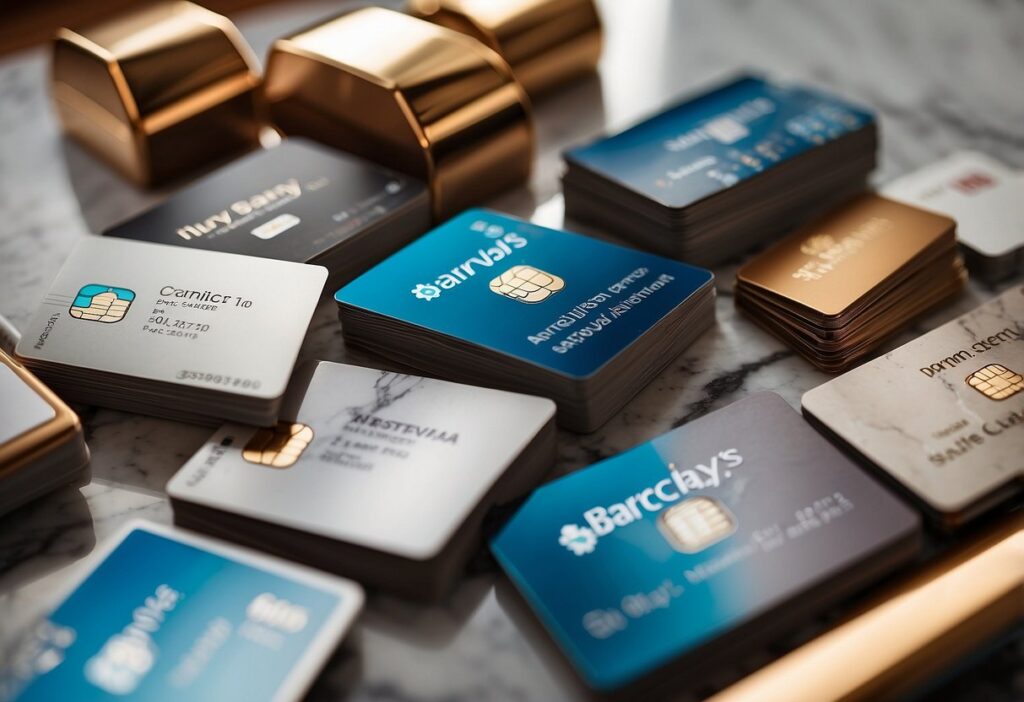
At its core, the search for luxury lifestyle cards in the USA is an attempt to reconcile high spending power with a desire for seamless logistical execution. These are not merely payment methods; they are high-limit, benefit-dense financial contracts that cater to a “Time-Rich, Effort-Poor” philosophy.
Multi-Perspective Explanation
From a Socio-Economic Perspective, these cards act as a filter for the “Prestige Economy.” By setting high annual fees and stringent credit requirements, issuers create a walled garden of users. This allows them to negotiate exclusive “Merchant-Side” deals such as guaranteed table availability at restaurants that are technically booked out for months because the merchant is guaranteed a high-spending, low-risk patron.
From a Mathematical Perspective, a lifestyle card is a “Rebate on Excess.” If a standard card offers 2% back, a lifestyle card might offer 5% or 10% in “lifestyle silos” (e.g., private villas, high-end fashion, or luxury wellness). For an individual whose annual spend in these categories exceeds $100,000, the “Alpha” generated by these multipliers can dwarf the annual fee, making the card a mathematically superior choice despite the $500–$5,000 entry cost.
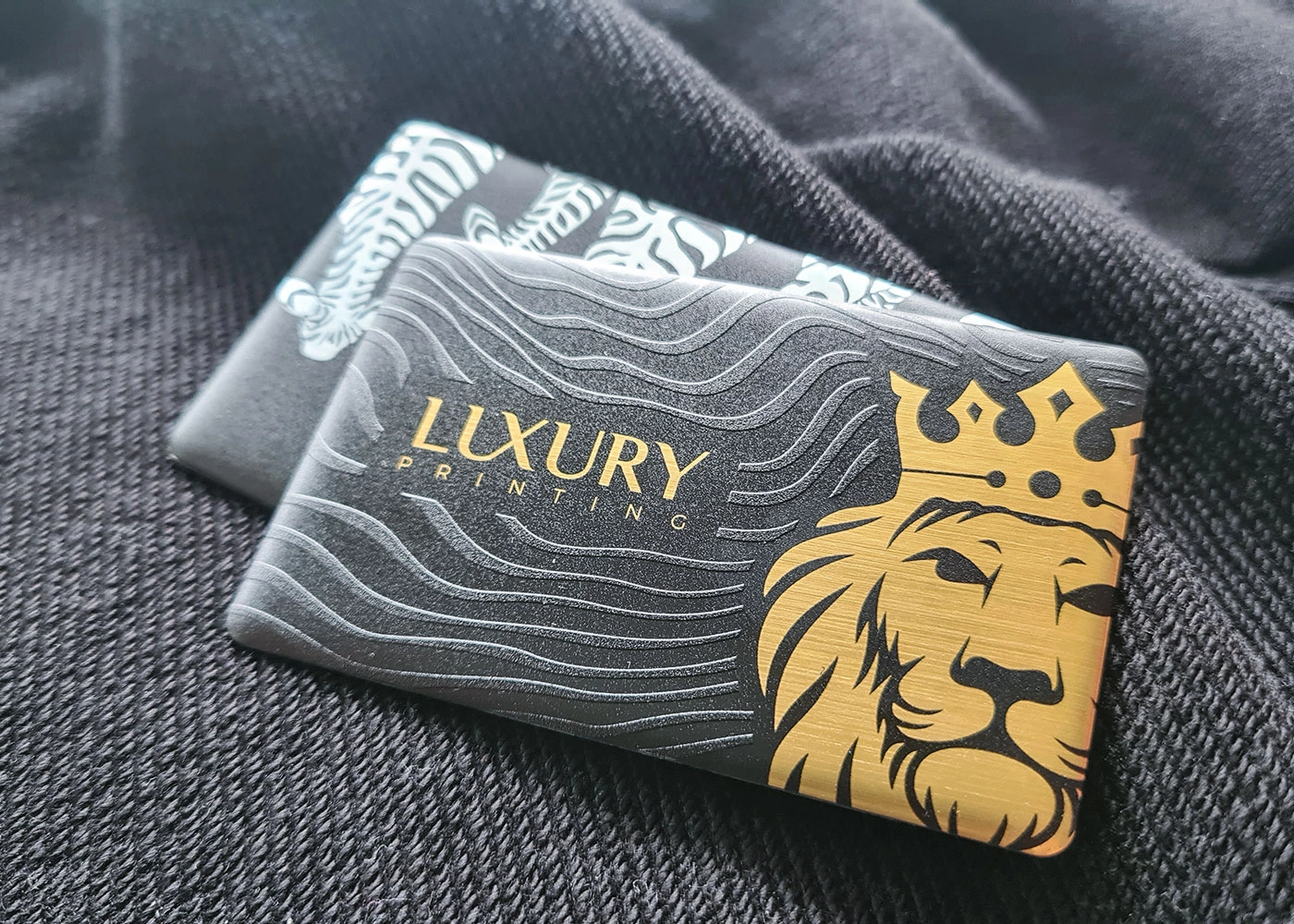
From a Psychological Perspective, these instruments satisfy the need for “Access-as-Identity.” The physical card, whether made of titanium, palladium, or carbon fiber, serves as a non-verbal signal of creditworthiness and social standing. However, for the pragmatic user, the true value lies in the “Human Layer”: the concierge services that can solve complex logistical problems, such as sourcing a rare gift or arranging a medical evacuation in a remote region.
Oversimplification Risks
The most prevalent misunderstanding is the “Status Trap,” where a consumer pays a $695+ annual fee for a card they rarely use, simply for the perceived prestige at the point of sale. Another risk is “Credit Fragmentation,” where a user holds multiple luxury cards with overlapping benefits (e.g., three different cards providing the same lounge access), effectively paying three different issuers for the same single utility.
Contextual Background: The Evolution of Prestige Credit
The lineage of the luxury card began with the American Express Centurion, the legendary “Black Card,d” which launched in 1999 as a response to urban myths about an ultra-exclusive invitation-only product. Before this, “Gold” and “Platinum” were the ceiling of the market. The Centurion changed the industry by proving that customers would pay a massive initiation fee for the absence of limits and the presence of a dedicated human concierge.
In the decade following 2016, the market shifted toward “Mass-Affluence.” Products like the Chase Sapphire Reserve and the Capital One Venture X democratized certain luxury perks like Priority Pass and Global Entry, making them standard. In 2026, we have entered the Bespoke Era. Luxury lifestyle cards now focus on “Hyper-Niche Integration.” This includes partnerships with Equinox for wellness, NetJets for aviation, and exclusive “lifestyle portals” that allow users to book experiences that do not exist on the open market.
Conceptual Frameworks and Mental Models
1. The “Subscription-to-Value” Ratio
This model treats the annual fee as a subscription service. To determine its validity, one must break down the “Cycled Credits.” If a card costs $695 but provides $200 in hotel credits, $240 in digital entertainment credits, and $200 in airline incidentals, the “True Cost” is $55. The mental model here is to never pay more for the “Access” than the “Utility” is worth to your actual, existing budget.
2. The “Logistical Friction” Heuristic
This model assesses a card’s value based on the “Time It Saves.” If a concierge can spend four hours on hold to secure a reservation that you would have otherwise lost, and you value your time at $200/hour, that single interaction has generated $800 in value. The heuristic is: A luxury card is only valuable if it performs labor you would otherwise have to do yourself.
3. The “Insurance Umbrella” Framework
Luxury cards often provide “Primary” rental car insurance, “Trip Cancellation” protection, and “Purchase Protection.” The mental model is to view the card as an “Embedded Insurance Policy.” For high-frequency travelers, this removes the need for per-trip insurance, which can cost $50–$200 per excursion.
Key Categories of Lifestyle Instruments
| Category | Primary Focus | Best For | Trade-off |
| Aviation-Centric | Private jets, lounge depth. | Global high-fliers. | High annual fees; very niche. |
| Culinary/Social | Michelin access, exclusive clubs. | Urban socialites. | Values are highly subjective. |
| Wellness/Health | Gym memberships, spa credits. | The health-conscious. | Limited to urban hubs. |
| Concierge-First | Human-led problem solving. | Busy professionals. | High reliance on service quality. |
| Hotel/Resort Heavy | Suite upgrades, late checkout. | Luxury vacationers. | Often tied to one hotel chain. |
| The “Stealth” Card | High limits, no flash. | Privacy-focused wealthy. | Minimal “lifestyle” perks. |
Decision Logic: The “Lifestyle Audit”
Before selecting a card, a user should perform a 90-day “Spend Silo” analysis. If 40% of discretionary spend goes to dining and 30% to travel, a card that offers 5x points on those categories plus “Preferred Seating” is the structural winner. Ispendingnd is fragmented across 10 different categories, a “Flat-Rate” high-limit card with concierge access is more efficient.
Detailed Real-World Scenarios
The “Last-Minute” Global Pivot
A business traveler is stuck in Tokyo due to a flight cancellation during a peak holiday.
-
The Logic: Standard rebooking lines are three hours long.
-
The Decision: Use the card’s dedicated “Elite” travel line.
-
Outcome: The traveler is rebooked on a partner airline within 15 minutes, bypassing the mass-market congestion.
-
Value: ~$1,000 (saved hotel night + time).
The “Rare Gift” Sourcing
An individual needs to find a discontinued luxury watch for a milestone anniversary.
-
The Logic: The item is not available on standard marketplaces.
-
The Action: Engages the Concierge “Lifestyle Desk.”
-
Result: The concierge leverages a relationship with a high-end boutique in Switzerland to secure the piece.
-
Failure Mode: Expecting the concierge to “lower the price.” They provide access, not discounts.
Planning, Cost, and Resource Dynamics
The “Cost” of luxury lifestyle cards in the USA is often hidden in the “Induced Spend” required to hit sign-up bonuses.
Resource Allocation Table
| Metric | Range | Impact on Net Worth |
| Annual Fee | $550 – $5,000 | Direct annual deduction. |
| Initiation Fee | $0 – $10,000 | One-time “Sunk Cost.” |
| Authorized User Fee | $175 – $500 | Cost of extending perks to family. |
| Induced Spend Gap | $5k – $25k | The extra spend is needed to “hit” a bonus. |
Tools, Strategies, and Support Systems
-
Digital “Benefit” Trackers: Apps that send push notifications when a monthly credit (like Uber or Equinox) is about to expire.
-
Concierge “Briefing” Sheets: Keeping a digital file of your preferences (bed type, pillow type, dietary restrictions) to give to the concierge once, ensuring all future bookings are bespoke.
-
The “Authorized User” Strategy: Adding a partner as an authorized user on a luxury card is often cheaper than them getting their own, while still providing them with full lounge and insurance benefits.
-
Retention “Scripts”: A systematic way to call the issuer annually to check for “Retention Offers”—often 50,000 points or a fee waiver—to keep you as a high-spend customer.
-
Mobile Wallet Optimization: Ensuring the “Lifestyle Card” is the default for high-multiplier categories (Dining/Travel) while a “Flat-Rate” card is used for miscellaneous spend.
-
Luxury Portals: Learning to use the issuer’s own booking engine (e.g., Fine Hotels & Resorts), which provides “Late Checkout” and “Complimentary Breakfast”—benefits that usually cost $150+ per stay.
Risk Landscape and Taxonomy of Failure Modes
-
“Coupon Fatigue”: The risk that managing 15 different $10-$20 monthly credits becomes a source of stress rather than a benefit.
-
“Utilization Creep”: Because luxury cards have high or “No Preset” limits, users may overspend on luxury items, leading to a liquidity crunch when the statement is due.
-
The “Lounge Crowd” Effect: The democratization of premium cards has led to overcrowding in airport lounges, sometimes rendering the “Lounge Access” perk unusable due to waitlists.
-
“Devaluation of Service”: As issuers scale, the quality of “Human Concierges” can drop, replacing bespoke problem-solving with automated, script-based responses.
Governance, Maintenance, and Long-Term Adaptation
A luxury portfolio requires “Quarterly Governance” to ensure the fees are still generating a positive “Alpha.”
Adjustment Triggers
-
Travel Velocity Change: If you go from 10 trips a year to 2, the $695 fee is no longer defensible.
-
Issuer “Benefit Nerfing”: When a card removes a key insurance perk or changes a point multiplier.
-
Annual Fee Hike: A trigger to re-run the “Subscription-to-Value” ratio.
Layered Checklist
-
Verify “Global Entry” credit hasn’t been unused for 4 years.
-
Audit monthly “Lifestyle Credits” for 100% utilization.
-
Review “Insurance Certificates” to ensure coverage limits haven’t been exceeded by new luxury purchases.
Measurement, Tracking, and Evaluation
-
Leading Indicators: “Concierge Usage Rate”; “Percentage of Spend in 5x Categories.”
-
Lagging Indicators: “Annual Redemption Value” (Total value of points used for First Class/Suites); “Insurance Claims Recovered.”
-
Documentation Examples:
-
The “Point-Value” Log: Tracking if you are getting at least 2.0 cents-per-point (CPP) on redemptions.
-
The “Access” Diary: Noting every time a card-specific perk (like a room upgrade) was successfully triggered.
-
Common Misconceptions and Oversimplifications
-
“The Concierge can do anything”: They cannot break laws or circumvent security protocols; they are logistical fixers, not magicians.
-
“Invitation-only cards are the best”: Often, mass-market “Premium” cards have better point-earning rates than “Invitation-only” cards, which focus on service.
-
“Metal cards are rare”: In 2026, even “Starter” cards are metal. The weight is no longer a proxy for wealth.
-
“I need a car for the insurance”: Most luxury cards provide “Primary” rental insurance, meaning you can decline the rental agency’s $30/day fee.
-
“Points are the only goal”: In the “Lifestyle” tier, the insurance and access are often worth more than the points.
-
“I should close the card if I don’t use it”: Sometimes, “Downgrading” to a no-fee version is better to preserve your credit history length.
Conclusion
The evolution of luxury lifestyle cards usa mirrors a broader cultural shift toward the professionalization of leisure. These financial instruments are designed for the individual who acknowledges that time is their most finite resource and is willing to pay a premium to protect it. Success in this tier of the credit market is not defined by the accumulation of a million points, but by the seamlessness with which one moves through the world. By treating these cards as an integrated lifestyle utility governed by rigorous NEV (Net Effective Value) analysis, the modern consumer can transform their wallet from a simple payment repository into a powerful engine for logistical and experiential arbitrage.