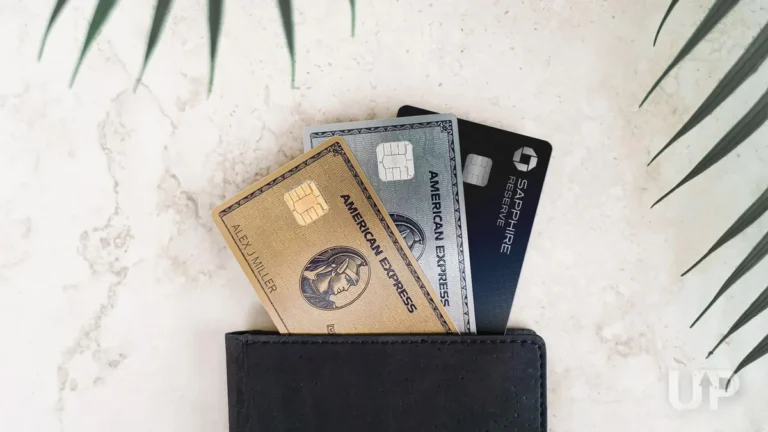
Luxury Travel Cards USA: The 2026 Definitive Strategy Guide
The premium credit market in the United States has undergone a fundamental metamorphosis over the last decade, transitioning from a niche service for the ultra-wealthy into a highly commoditized, yet structurally complex, segment of the financial services industry. In 2026, the value proposition of a high-annual-fee card is no longer tethered solely to the prestige of the physical material or the credit limit provided. Instead, these instruments have become integrated lifestyle “operating systems” that attempt to consolidate travel logistics, insurance mitigations, and luxury access into a single recurring subscription model.
For the sophisticated consumer, the challenge lies in the “couponification” of these products. Issuers have moved toward a high-fee, high-rebate structure where the nominal annual cost is offset by a fragmented array of monthly or annual credits. Navigating this landscape requires more than a cursory glance at a rewards rate; it demands an analytical approach to “Net Effective Value” and an honest assessment of one’s own consumption velocity. Without this rigor, a traveler may find themselves prepaying for services they would not otherwise utilize, essentially providing an interest-free loan to the banking sector in exchange for underutilized perks.
This editorial pillar deconstructs the architecture of the premium credit ecosystem. We will move beyond the superficial marketing of airport lounge access and concierge services to examine the systemic mechanics of transfer partners, the mathematical reality of point devaluation, and the risk-management utility of secondary travel protections. By establishing a professional framework for evaluation, we aim to provide a definitive reference for those who view their credit portfolio as a strategic asset rather than a mere payment method.
Understanding “luxury travel cards usa”
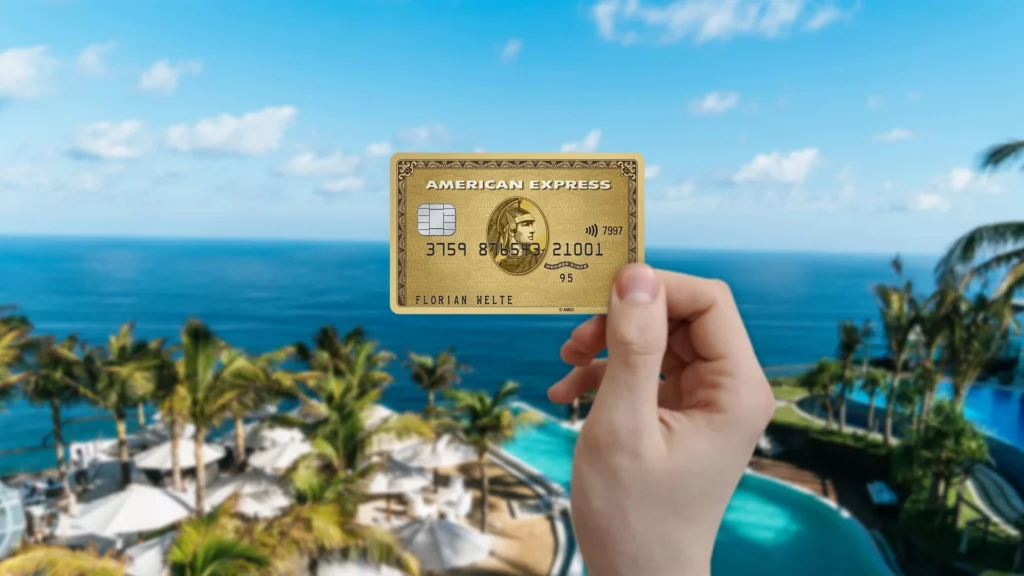
The term “luxury” in the context of American credit products is often a misnomer for “logistically optimized.” To understand luxury travel cards in the USA, one must look at them as three-layered financial instruments: a revolving credit facility, a travel insurance policy, and a points-based arbitrage vehicle.
Multi-Perspective Explanation
From an Economic Perspective, these cards are tools for reclaiming interchange fees. Every time a transaction is processed, the merchant pays a percentage to the bank. A luxury card is designed to return a larger portion of that fee to the consumer, provided the consumer is spending in specific high-margin categories like airfare, dining, or luxury lodging. The “luxury” component is essentially a rebate on the merchant’s cost of doing business.
From a Logistical Perspective, a premium card acts as a “Friction Reducer.” The value of a Global Entry credit, a CLEAR Plus membership, or Priority Pass lounge access is not just the dollar amount; it is the reduction in “Travel Fatigue.” For the high-frequency traveler, the cumulative time saved and stress avoided represents a qualitative return on investment that often exceeds the card’s annual fee.
From an Insurance Perspective, these cards serve as a primary or secondary layer of risk mitigation. Trip delay reimbursement, lost luggage protection, and primary rental car insurance are built-in features that replace the need for per-trip insurance policies. In this light, the annual fee is effectively a premium for a broad-spectrum travel insurance umbrella.
Oversimplification Risks
A significant risk in this domain is the “Aspirational Trap.” Consumers often apply for a card based on a lifestyle they wish to lead rather than the one they currently maintain. If your annual travel involves one domestic flight and two hotel stays, the logistical benefits of a $695 annual fee card will never mathematically manifest. The oversimplification that “more points equals more value” ignores the “Velocity of Redemption.” If points are earned faster than they can be strategically spent, they become a depreciating asset prone to issuer-driven inflation.
Contextual Background: The Evolution of the Prestige Tier
The history of the premium card in the U.S. began as a “charge card” model—exemplified by the original Diners Club or the American Express Green card, where the primary value was the convenience of not carrying cash and the requirement to pay in full. The “Prestige Tier” truly bifurcated in the late 1990s with the introduction of invitation-only products, creating a psychological desire for metal and “unlimited” credit.
However, the modern era was ushered in by the “Sapphire Reserve” event of 2016, which demonstrated that a high-fee card could achieve mass-market penetration if the sign-up bonus and the redemption flexibility were aggressive enough. This led to a “Benefits Arms Race” among issuers like Chase, American Express, and Capital One. In 2026, we are seeing the “Platformization” of these cards, where issuers are building their own travel portals to capture more of the travel booking margin, further complicating the decision for the consumer.
Conceptual Frameworks and Mental Models
1. The “Net Effective Value” (NEV) Formula
This is the fundamental mental model for any premium cardholder.
Where:
-
S: Sign-up bonus (amortized over the expected life of the account).
-
C: Direct credits (Travel, Dining, Lifestyle credits you would have spent anyway).
-
R: Rewards value (Points earned $\times$ redemption value).
-
I: Insurance/Logistical value (Lounge access, trip protections).
-
A: Annual fee.
If the NEV is not significantly higher than the 2% cash back you could get from a free card, the luxury card is a structural loss.
2. The “Transfer Partner Arbitrage” Model
Points are not a currency; they are a “Transferable Utility.” This model views issuer points (like Chase Ultimate Rewards or Amex Membership Rewards) as a bridge. The goal is to move points to airline or hotel partners only when an “outsized value” redemption is available (e.g., 5 cents per point for a business class seat vs. 1 cent per point in the travel portal).
3. The “Unused Credit” Liability
This model treats every monthly or annual credit (like a $20 Uber credit or a $200 hotel credit) as a debt the bank owes the cardholder. If the cardholder fails to use the credit, the bank “wins” that month. Managing a luxury card is essentially a monthly task of “Collecting Your Debts” from the bank to ensure you are not subsidizing other cardholders.
Key Categories and Market Variations
| Category | Typical Annual Fee | Primary Target | Best For |
| The All-Rounder | $395 – $550 | General Travelers | Flexibility in redemption and ease of use. |
| The Luxury Specialist | $695+ | Frequent Flyers | Lounge networks and elite status shortcuts. |
| The Ecosystem Anchor | $250 – $450 | Brand Loyalists | Maximizing a single hotel or airline chain. |
| The Business Premium | $595+ | Business Owners | High-volume spend in business categories. |
Decision Logic: The “Rule of Two”
A realistic decision logic for most consumers is to hold no more than two high-fee cards. One should be a “Transferable Points” card for general spend and travel flexibility, and the second should be a “Co-branded” card for whichever airline or hotel chain the user frequents most. Owning more than two often leads to “Credit Fragmentation,” where points are spread too thin across too many ecosystems to reach a meaningful redemption threshold.
Detailed Real-World Scenarios

The “Points Millionaire” and Devaluation
A cardholder accumulates 1,000,000 points over three years but rarely redeems them.
-
Risk: The airline partner changes their award chart, increasing the cost of a flight from 80k to 120k points.
-
Second-Order Effect: The traveler’s 1,000,000 points just lost 33% of their purchasing power.
-
Strategy: “Earn and Burn.” Treat points like milk, not like wine; they do not get better with age.
The “Forced Spend” Failure
A cardholder sees a $200 “Luxury Hotel” credit. To use it, they book a $400 night at a hotel they otherwise wouldn’t have stayed at.
-
Constraint: The user spent $200 of “new money” to save $200.
-
Decision Point: If the hotel stay wasn’t already in the budget, the credit actually cost the user money.
Planning, Cost, and Resource Dynamics
The “Cost” of a luxury card is not just the annual fee; it is the “Complexity Tax” of managing the account.
| Expense Type | Range | Variable Factors |
| Direct Annual Fee | $395 – $695 | Issuer, Tier, Number of Authorized Users. |
| Authorized User Fee | $75 – $195 | Some cards charge per person for lounge access. |
| Point Opportunity Cost | 1% – 3% | The difference between 1x points and a 2% cash-back baseline. |
| Foreign Transaction Fees | 0% | Most luxury cards waive this (a $0 baseline). |
Range-Based Value Table
| Annual Travel Spend | Estimated Value Recaptured | Verdict |
| <$2,000 | -$100 to +$50 | Not recommended. |
| $5,000 – $10,000 | $200 – $600 | High utility. |
| $20,000+ | $1,500+ | Essential tool. |
Tools, Strategies, and Support Systems
-
Award Search Engines: Tools that scan all airline partners at once to find the “Sweet Spot” redemptions.
-
Point Trackers: Centralized dashboards to monitor balances across 10+ ecosystems to prevent expiration.
-
Lounge Locators: Real-time maps of airport terminals to identify which lounges are open and which have waitlists.
-
Retention Scripts: A systematic way to call the bank once a year and ask for a fee waiver or “Spending Challenge” to offset the annual cost.
-
Authorized User Optimization: Strategically adding a spouse or partner to share lounge access for a lower total fee.
-
The “Downgrade Path”: Knowing exactly which no-fee card you can “product change” to if you decide the luxury card is no longer worth it, preserving your credit age.
Risk Landscape and Taxonomy of Failure Modes
-
The “Utilization Spike”: Because luxury cards often have high limits, carrying a balance—even if paid in full—can temporarily lower your credit score if it reports on a high-spend month.
-
The “Hard Pull” Cascade: Applying for three luxury cards in a year can signal desperation to lenders, leading to account shutdowns or lower limits.
-
The “Portal Lock-in”: If you book through an issuer’s travel portal to get 10x points, you often lose your hotel elite status benefits (Free breakfast, upgrades). This is a “Value Trade-off” that is rarely highlighted in marketing.
-
The “Secondary Insurance” Trap: Assuming a card covers car theft, only to find out it is “Secondary” to your personal insurance, meaning you still have to file a claim with your provider and see your rates rise.
Governance, Maintenance, and Long-Term Adaptation
A luxury card portfolio requires an “Annual Audit.”
Adjustment Triggers
-
Issuer Devaluation: If a major transfer partner is dropped, the card may no longer be viable.
-
Lifestyle Shift: Transitioning from international business travel to domestic family travel requires a shift from “Lounge Cards” to “Companion Pass” cards.
-
Annual Fee Increase: Every time a fee rises (e.g., from $550 to $695), the NEV formula must be re-run.
Layered Checklist
-
Verify Global Entry/TSA PreCheck expiration (usually every 4-5 years).
-
Confirm all “Monthly Credits” are automated (Uber, Streaming).
-
Audit “Point Expiration” dates for all transfer partners.
-
Call the “Retention Line” 30 days before the annual fee hits.
Measurement, Tracking, and Evaluation
-
Leading Indicators: Monthly points earned vs. monthly spending. If the ratio drops, your “Daily Driver” card is wrong.
-
Lagging Indicators: Total value of redemptions over 12 months vs. total annual fees paid.
-
Quantitative Signal: The “CPP” (Cents Per Point) of your last three redemptions. If you are consistently below 1.2 CPP, you are better off with a cash-back card.
Common Misconceptions and Oversimplifications
-
“Metal cards are for the rich”: In 2026, metal is a marketing gimmick used by entry-level cards.
-
“Points are free money”: Points are a “non-guaranteed promissory note” from a bank.
-
“Lounge access is always available”: With the rise in premium cardholders, lounges often have 30-minute wait times.
-
“I need to spend a lot to make it worth it”: Even a moderate spender can break even through the sign-up bonus and direct credits alone.
-
“Business cards are only for corporations”: Anyone with a side-hustle (selling on eBay, freelancing) can technically qualify for business luxury travel cards usa.
-
“Closing a card ruins your credit.”: While it has an impact, the “Age of Account” remains on your report for 10 years after closing.
Conclusion
The selection and management of luxury travel cards in the USA is an exercise in financial clinicality. The market has moved away from simple rewards into a complex landscape of prepaid credits and portal-driven ecosystems. For the traveler who is willing to treat their wallet as a managed portfolio, calculating NEV, auditing annual fees, and strategically timing redemptions, these cards remain the most effective way to arbitrage the cost of luxury travel. However, for the passive consumer, they are increasingly becoming a “Complexity Tax.” The goal of the modern cardholder is to remain the beneficiary of the bank’s customer acquisition costs, rather than the financier of their rewards programs.