Luxury Travel Perks USA: The 2026 Definitive Strategy Guide
The landscape of high-end transit within the United States is increasingly defined by the commodification of time and the institutionalization of convenience. As the domestic aviation and hospitality sectors grapple with unprecedented density, the value of travel amenities has shifted from aesthetic luxury to operational necessity. For the sophisticated traveler, the focus is no longer merely on the thread count of a suite or the vintage of a vintage champagne, but on the structural bypass of systemic friction. This represents a transition from “perks as rewards” to “perks as infrastructure,” where a specialized suite of benefits acts as a personal operating system designed to mitigate the volatility of a globalized travel environment.
In 2026, navigating these offerings requires an analytical detachment from traditional travel marketing. The democratization of “premium” services through mass-market credit products has led to a saturation of traditional elite channels, creating a “Capacity-Value Paradox.” To maintain true exclusivity and utility, the upper echelons of the industry have pivoted toward “Invisible Logistical Layers” services that intervene in the travel process before the user even encounters a bottleneck. These range from private terminal transfers that bypass the public airport entirely to predictive concierge interventions that reroute itineraries before a flight cancellation is officially announced.
This editorial pillar interrogates the mechanics of the elite American travel ecosystem. We will move beyond the superficial listicles of lounge access to examine the systemic evolution of high-tier benefits, the mathematical frameworks required to justify their acquisition, and the risk-management strategies necessary for their effective utilization. This is intended as a definitive reference for those who view travel not as a series of disparate trips, but as a continuous logistical challenge that requires a rigorous, data-driven approach to optimization.
Understanding “luxury travel perks usa”

To evaluate the current state of luxury travel perks usa is to analyze the intersection of financial agency and logistical priority. A “perk” is no longer a static gift; it is a dynamic intervention in the travel process.
Multi-Perspective Explanation
From an Economic Perspective, these benefits are a form of “Bundled Arbitrage.” By committing to a high-annual-fee membership or a specific airline loyalty tier, the consumer is pre-purchasing access to services such as private suites, chauffeured transfers, and room upgrades at a cost that is significantly lower than the cumulative retail price of those items. The issuer or provider bets on “Breakage,” the mathematical probability that the consumer will not utilize every benefit in the bundle, thereby preserving the provider’s margins.
From a Logistical Perspective, these perks function as “Buffer Assets.” In a strained domestic travel infrastructure, the primary value of a luxury perk is its ability to provide a secondary path when the primary path fails. This includes access to dedicated rebooking agents, priority standby status, and “held” inventory in hotels that are technically sold out. The perk serves as an insurance policy against systemic instability.
From a Behavioral Perspective, luxury perks serve as a “Nudge toward Efficiency.” Features such as biometric security bypass (CLEAR/TSA PreCheck) and global entry credits encourage the traveler to adopt more efficient habits, which in turn reduces the aggregate stress on the traveler’s cognitive load. By removing small, repetitive friction points, these benefits allow the high-velocity traveler to preserve their energy for high-stakes professional or personal engagements.
Oversimplification Risks
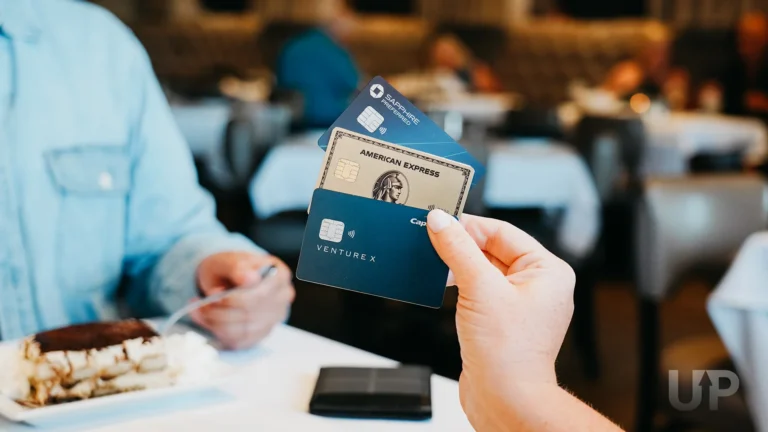
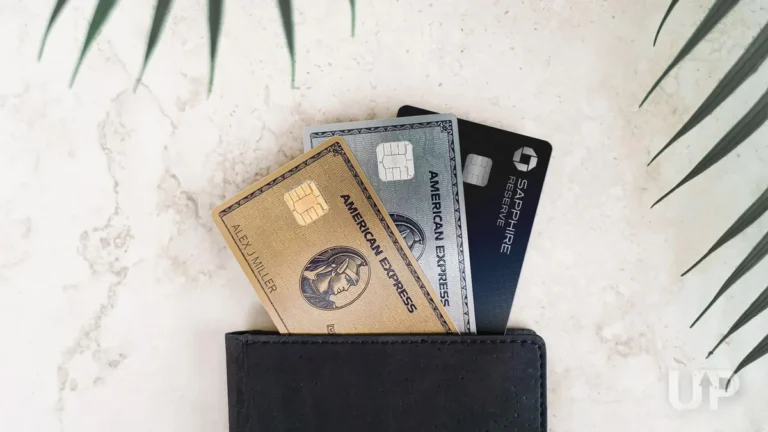
A significant misunderstanding in the market is the “Prestige Bias,” where consumers prioritize the physical aesthetics of a perk (such as a metal card or a branded lounge) over its functional utility. Another risk is “Utility Overlap,” where a traveler pays multiple fees for the same benefit (e.g., holding three different credit cards that all provide the same Priority Pass membership), effectively wasting capital on redundant infrastructure.
Contextual Background: The Evolution of Elite Access
The lineage of luxury travel in America has moved through three distinct phases. The “Era of Grandeur” (1950s–1970s) was defined by the inherent luxury of flight itself, where perks were universal to the first-class cabin. The “Era of Loyalty” (1980s–2010s) saw the birth of frequent flyer programs, where perks became a reward for historical behavior rather than current spend.
In 2026, we have entered the “Era of Curated Infrastructure.” This era is characterized by the decoupling of perks from simple airline tickets. Now, the most significant benefits are delivered by third-party financial and technology platforms. We see the rise of “Private Terminal Suites” like PS (formerly The Private Suite) at major hubs, which allow travelers to bypass the main terminal entirely, regardless of their airline or class of service. This represents a total commodification of the airport experience, where the “perk” is the absence of the airport itself.
Conceptual Frameworks and Mental Models
1. The “Friction-to-Value” Ratio
This framework dictates that the value of a luxury perk is directly proportional to the amount of friction it removes. A “Suite Upgrade” in a resort town during the off-season has a low ratio. A “Private Security Bypass” at JFK on a Friday afternoon has an exceptionally high ratio. The mental model suggests: Prioritize perks that solve for the highest-density friction points in your specific geography.
2. The “Systemic Recovery” Heuristic
This model assesses a perk based on its “Authority Level.” If a concierge service can only book what you can see on a website, it is a “Low-Authority” perk. If the service can override a booking system or access “Unlisted Inventory,” it is a “High-Authority” asset. The goal is to build a portfolio of high-authority perks that can intervene during irregular operations (IRROPS).
3. The “Time-As-Capital” Framework
In this model, every travel perk is viewed as a “Time Purchase.” If a private terminal transfer saves 90 minutes of terminal navigation, and the user values their time at $500/hour, the benefit has a “Time Value” of $750. If the cost of the perk is less than the time value, it is a mathematically sound investment.
Key Categories of Premium Travel Variations
| Category | Primary Benefit | Best For | Critical Trade-off |
| Aviation Logistics | Private terminals; tarmac transfers. | High-security/High-privacy needs. | High per-use cost. |
| Hospitality Access | Guaranteed late checkout; upgrades. | “Work-from-Hotel” travelers. | Tied to specific booking portals. |
| Status Accelerators | Elite status multipliers; giftable tiers. | Business travelers building loyalty. | Requires high annual spend. |
| Safety & Wellness | Medical evacuation; gym memberships. | Long-haul health-conscious. | Often underutilized until a crisis. |
| Human Concierge | Relationship-based fixing. | Complexity-heavy itineraries. | Variable service quality. |
| Financial Protection | Primary rental/Trip cancellation. | Risk-averse high-frequency users. | Buried in fine-print limitations. |
Detailed Real-World Scenarios and Decision Logic
The “Red-Eye” Transition
A traveler arrives in a different time zone at 6:00 AM and has a meeting at 10:00 AM.
-
The Logic: A standard hotel check-in is 3:00 PM.
-
The Perk: Utilizing a “Guaranteed 9:00 AM Check-in” benefit provided by a luxury hotel program.
-
Outcome: The traveler showers, rests, and prepares in a private suite instead of a public lounge or lobby.
-
Value: Significant cognitive recovery and professional readiness.
The “Mass Cancellation” Event
A major storm grounds all flights at a hub airport.
-
The Logic: The 1-800 rebooking lines have a 4-hour wait time.
-
The Action: Contacting a “Premium Concierge” or using a “Dedicated Elite Support Line” attached to a luxury membership.
-
Outcome: The agent secures one of the few remaining seats on a morning flight before the general public can even reach a representative.
-
Failure Mode: Relying on the airline’s automated app, which may not show partner airline inventory.
Planning, Cost, and Resource Dynamics
The “Cost” of luxury travel perks in the USA is often obscured by the complexity of membership structures.
| Expense Type | Range (Annual) | Factors of Variability |
| Core Membership Fees | $550 – $5,000 | Number of authorized users; tier of service. |
| Ancillary Service Costs | $1,000 – $10,000 | Per-visit fees for private terminals or suites. |
| Induced Spending | $5,000 – $20,000 | Extra spend required to maintain “Elite” tiers. |
| Opportunity Cost | 2% – 5% | Value is lost if rewards are not optimized. |
Tools, Strategies, and Support Systems

-
“Status-Matching” Protocols: A strategy where a traveler uses one luxury perk (e.g., Hilton Diamond status from a card) to “match” into a competitor’s program (e.g., Marriott Gold), doubling their coverage without doubling their cost.
-
Digital “Benefit” Dashboarding: Using centralized apps to track “Use-it-or-Lose-it” monthly credits (like Uber, airline incidentals, or hotel credits) to ensure 100% utilization.
-
The “Shadow” Itinerary: Asking a high-tier concierge to create a “Backup” travel plan during peak seasons in case of weather disruptions.
-
Authorized User Leveraging: Adding family members to a primary luxury account to extend “Lounge” and “Insurance” benefits to the entire household at a fraction of the cost.
-
Wholesale Portal Booking: Utilizing “Fine Hotels & Resorts” or “Lifestyle Collection” portals, which provide $100 credits and free breakfast perks that often pay for the membership fee in 2-3 stays.
-
“Hidden” Benefit Audits: Regularly reviewing the “Guide to Benefits” for insurance layers like “Baggage Delay” and “Cell Phone Protection”, which are often forgotten.
Risk Landscape and Taxonomy of Failure Modes
-
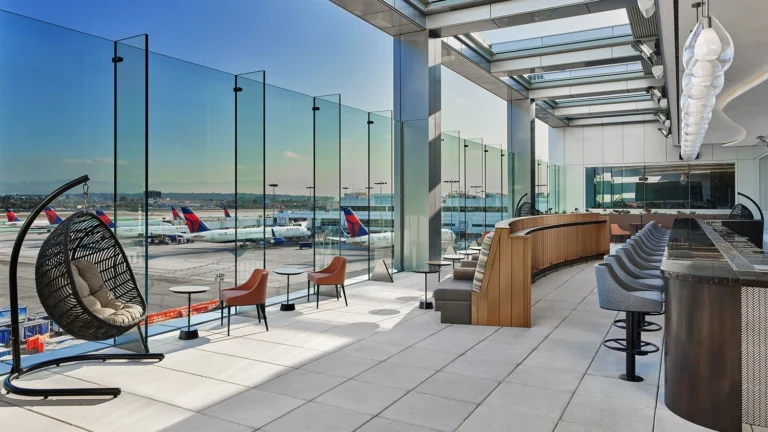
The “Lounge Overcrowding” Fatigue: The risk that “democratized luxury” makes a lounge more stressful than the terminal, rendering the perk a liability.
-
“Devaluation” Risk: The systemic lowering of benefit values (e.g., an airline increasing the points needed for a flight) while the membership fee remains high.
-
“Benefit Complexity” Blindness: The failure to utilize a perk because the terms and conditions (e.g., “must book 48 hours in advance”) are too cumbersome for a high-speed life.
-
“Indebtedness to Brand”: The risk of choosing a less-efficient travel route or a more expensive hotel simply to “stay within the perk ecosystem.”
Governance, Maintenance, and Long-Term Adaptation
Maintaining a luxury travel infrastructure requires “Quarterly Governance.”
Monitoring Cycles
-
Quarterly: Review “Credit Utilization” and “Status Match” expirations.
-
Annually: Calculate the “Net Effective Value” (Benefits used minus fees paid).
Adjustment Triggers
-
Hub Shift: If a traveler moves to a city dominated by a different airline, their entire perk portfolio must be re-architected.
-
Policy Change: If an issuer removes “Primary Rental Insurance,” it triggers a mandatory review of the card’s position in the portfolio.
Measurement, Tracking, and Evaluation
-
Leading Indicators: “Concierge Usage Frequency”; “Upgrade Success Rate.”
-
Lagging Indicators: “Total Dollar Value of Redeemed Benefits”; “Time Saved per Trip.”
-
Documentation:
-
The “Travel ROI” Sheet: A ledger of every upgrade, free breakfast, and waived fee.
-
The “Friction Log”: A record of moments where a perk failed to solve a problem (e.g., a “Sold Out” lounge).
-
Common Misconceptions and Oversimplifications
-
“The card is the perk”: In 2026, the physical card is irrelevant; the perk is the digital entitlement behind it.
-
“Lounges are for eating”: No, for the luxury traveler, lounges are for power and silence.
-
“Status is only about miles”: False; status is about the priority queue during a crisis.
-
“Concierges are for rich people”: Modern concierges are for busy people who need to outsource the labor of research.
-
“I don’t travel enough for this”: If you travel twice a year during peak holidays, the “Service Recovery” of one perk can pay for the entire year’s fee.
-
“All metal cards are premium”: Weight is no longer a proxy for service level.
Conclusion
The pursuit of luxury travel perks is an exercise in “Systemic Optimization.” It is the transition from being a passenger to being a manager of one’s own mobility. As travel becomes more commoditized and congested, the ability to carve out a private, efficient, and resilient path through the infrastructure is the ultimate competitive advantage. By treating travel benefits as a “Logistical Portfolio” governed by clear NEV (Net Effective Value) metrics and a focus on friction removal, the modern traveler ensures that their movement through the world is a source of rejuvenation rather than exhaustion.