Top Airport Lounges in America: The 2026 Definitive Strategy Guide
The modern American airport terminal is a study in high-density logistics and sensory saturation. For the frequent traveler, the gate area has increasingly become a space of friction rather than transition, defined by limited infrastructure and the constant auditory intrusion of public announcements. Within this context, the airport lounge has evolved from a simple seating amenity into a critical layer of travel infrastructure. It functions as a controlled micro-environment designed to mitigate the physiological and psychological stresses of long-haul transit.
However, the “golden age” of lounge access, once defined by simple airline loyalty, has been replaced by a fragmented ecosystem of credit card partnerships, independent networks, and paid entry tiers. In 2026, navigating this landscape requires an analytical understanding of the “Capacity-Value Paradox”: as access becomes more democratized through premium financial products, the actual utility of a lounge often diminishes due to overcrowding. True topical mastery of this domain involves looking past the superficial marketing of complimentary spirits and buffet selections to examine the structural mechanics of lounge operations and the logistical strategy required to secure entry.
This editorial pillar interrogates the systemic evolution of domestic aviation hospitality. We will move beyond the common lists of “best” locations to examine the architectural nuances of the “top” tier, the mathematical reality of access-to-crowd ratios, and the risk-management frameworks necessary for a seamless journey. This is a definitive reference for those who view the airport lounge not as a luxury but as a strategic asset in the management of their personal and professional time.
Understanding “top airport lounges in america”
To categorize top airport lounges in America requires a multidimensional evaluation that transcends interior design. A lounge is effectively a service-delivery platform that must balance high-volume throughput with the expectation of exclusivity.
Multi-Perspective Explanation
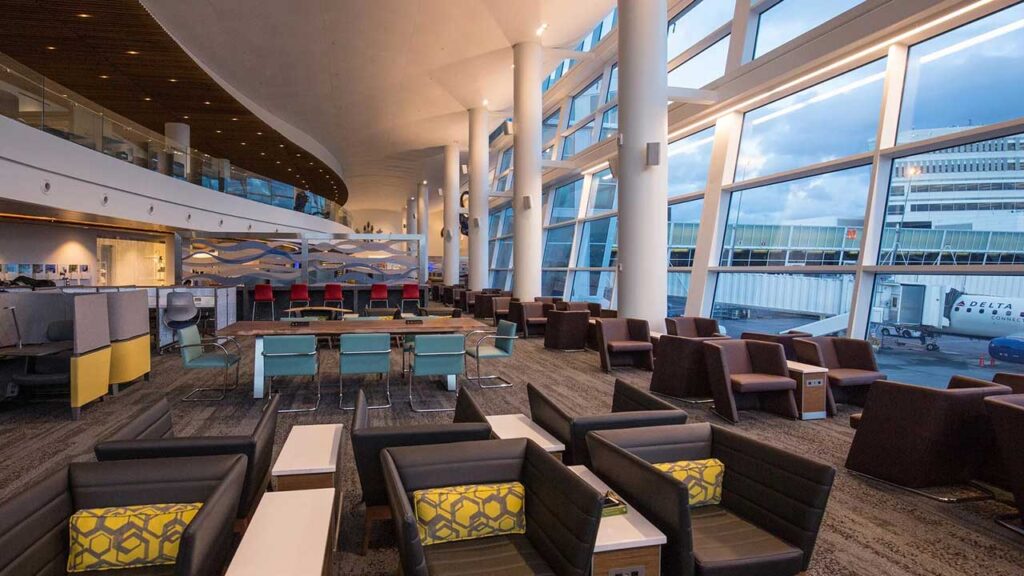
From an Architectural Perspective, the highest-tier lounges utilize “Zonal Planning” to separate disparate traveler needs. A superior lounge is not a single large room, but a series of interconnected environments: acoustic-dampened work pods, high-energy dining social zones, and light-controlled relaxation areas. The mastery lies in the transition between these zones, ensuring that a business traveler seeking silence is not interrupted by the activity of a family-oriented buffet.
From an Operational Perspective, a lounge is judged by its “Consistency of Service.” This includes the refresh rate of the culinary offerings, the cleanliness of the shower suites, and, most importantly, the capability of the agents at the “Troubleshooting Desk.” In the event of a mass flight cancellation, the value of a lounge agent with the authority to rebook tickets far exceeds the value of a premium bar program.
From a Socio-Economic Perspective, the market has bifurcated into “Inclusive” and “Exclusive” models. Inclusive lounges (like those provided by major credit card networks) focus on brand-building and mass-market loyalty, while exclusive lounges (like international first-class wings or invitation-only suites) serve as a retention tool for the airline’s highest-revenue clients.
Oversimplification Risks
The most significant oversimplification is the belief that “Elite Status” is a universal key. Many travelers assume that a high-tier status with one airline grants access across a domestic network, ignoring the nuances of “Cabin Class” requirements or “Same-Day International” ticket stipulations. Furthermore, the “Lounge-as-Restaurant” myth often leads to disappointment; while culinary standards have risen, the primary function of a lounge remains a sanctuary for work and rest, not a replacement for high-end airport dining.
Contextual Background: The Evolution of the Terminal Sanctuary
The origin of the American airport lounge can be traced to the late 1930s, specifically the American Airlines Admirals Club at New York’s LaGuardia. Initially, these were private clubs intended for the “social elite” of the burgeoning aviation industry. For decades, the model remained stagnant: a quiet room with a bar and basic snacks, available only to those with deep airline ties.
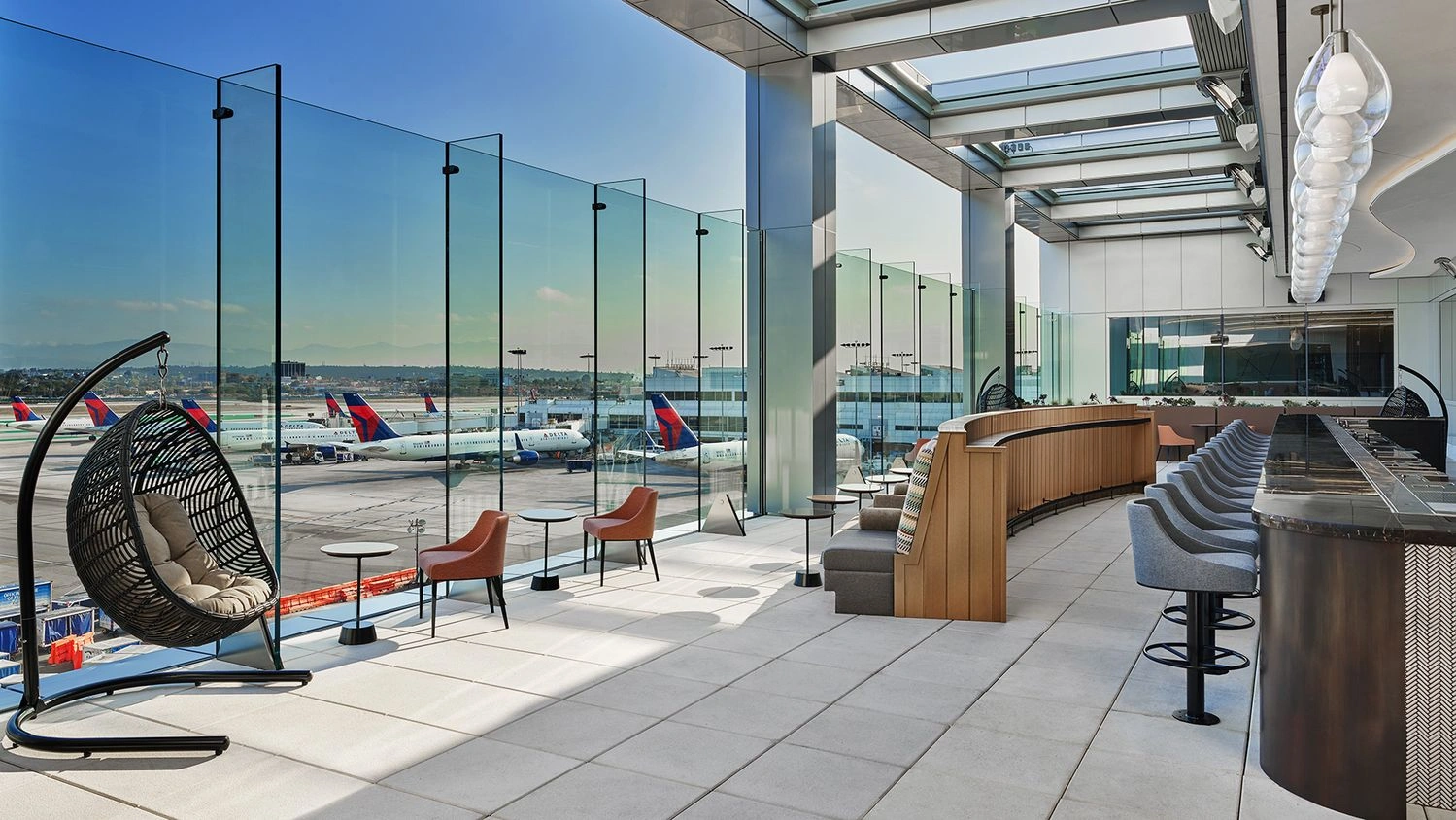
The 2010s marked a systemic shift with the entry of financial institutions into the space. When American Express launched its first Centurion Lounge, it disrupted the airline-controlled monopoly by offering a product that rivaled international standards. This forced domestic carriers to upgrade their offerings, leading to the creation of “Flagship” and “Polaris” tiers. In 2026, we are in the era of “Specialized Utility,” where lounges are being designed with ultra-specific features like Peloton suites, high-fidelity sound rooms, and outdoor viewing decks.
Conceptual Frameworks and Mental Models
1. The “Distance-to-Gate” Heuristic
This framework dictates that the utility of a lounge is inversely proportional to the time required to reach the boarding gate. A world-class lounge in Terminal A has zero value if your flight departs from Terminal C and requires a 20-minute shuttle ride. The mental model suggests: Only utilize a lounge if the “Net Sanctuary Time” (Total time minus travel time) exceeds 45 minutes.
2. The “Crowd Density” Algorithm
For the solitary traveler, the value of a lounge is determined by “Square Footage per Capita.” A mediocre lounge with 10 occupants is functionally superior to a five-star lounge at 100% capacity. The algorithm involves checking “Live Occupancy” data (if available) before committing to the security line or terminal transfer.
3. The “Service Recovery” Framework
This model views the lounge not as a destination, but as a “Buffer” against travel volatility. The primary value is access to a “Concierge-Level” agent during irregular operations (IRROPS). In this framework, the lounge is an insurance policy for your itinerary.
Key Categories of Lounge Variations
| Category | Access Driver | Primary Strength | Critical Trade-off |
| Issuer Lounges | Premium Credit Cards | High-end culinary/design. | Extreme overcrowding. |
| Airline Flagship | International First/Biz | Exceptional service; showers. | Highly restrictive entry. |
| Standard Hub Clubs | Annual Membership/Status | High geographical density. | “Basic” food and beverage. |
| Independent (Priority Pass) | Third-party membership | Most flexible entry. | Often have “Waitlists” or restricted hours. |
| Common Use/Paid | Single-use pass | No long-term commitment. | Variable quality; inconsistent. |
| Invitation-Only | Top 0.01% Revenue | Extreme privacy; car service. | Invisible to the general public. |
Detailed Real-World Scenarios and Decision Logic
The “Four-Hour Layover” Strategy
A traveler is transiting through a major hub like DFW or JFK with a four-hour window.
-
The Logic: This is enough time to justify a “Terminal Swap” for a superior lounge.
-
The Decision: Bypass the standard club at the arrival gate and take the airside train to the premium issuer lounge.
-
Failure Mode: Forgetting to account for the “Waitlist” at the premium lounge, ending up with no seat at all.
The “Short-Haul” Commuter
A business traveler has 45 minutes before boarding a regional jet.
-
The Logic: Travel time to a “Top” lounge is 15 minutes.
-
The Action: Stay at the gate or find a quiet “Standard” club immediately adjacent to the gate.
-
Outcome: Higher productivity than wasting 30 minutes in transit for 10 minutes of “Luxury.”
Planning, Cost, and Resource Dynamics
The “Cost” of lounge access is rarely a direct ticket price; it is an aggregation of credit card fees, opportunity costs, and travel timing.
Resource Allocation Table
| Access Method | Annualized Cost | Primary Constraint | Value Threshold |
| Credit Card Fees | $395 – $695 | “Hard” Credit Pull. | 5+ visits per year. |
| Airline Membership | $500 – $750 | Locked to one airline. | 20+ visits per year. |
| Single-Day Pass | $50 – $79 | Limited availability. | High-stress layovers only. |
| Status Earning | $15k+ Spend | Loyalty opportunity cost. | High-frequency business travel. |
Tools, Strategies, and Support Systems
-
Lounge Aggregator Apps: Tools that show every lounge available in a specific terminal based on your credit cards and status.
-
“Live Occupancy” Trackers: Some issuers now show real-time “Capacity” bars in their apps.
-
The “Waitlist” Remote Entry: Joining a lounge waitlist through an app the moment the plane lands.
-
Offline Terminal Maps: Knowing the “Airside” connectors between terminals to avoid re-clearing security.
-
Mobile “Grab-and-Go” Orders: Using lounge-specific mobile ordering to get food without standing in buffet lines.
-
Lounge Agent “Authorization”: Knowing which lounges can actually change your seat or ticket and which are just third-party “Space Providers.”
-
The “Second-Screen” Workstation: Seeking lounges that offer dedicated monitors or ergonomic cubicles.
Risk Landscape and Taxonomy of Failure Modes
-
The “Waitlist Trap”: Arriving at a lounge to find a 60-minute wait, leaving the traveler stranded with no backup plan.
-
The “Lounge-to-Gate” Miscalculation: Underestimating the time it takes to exit a large lounge and reach a distant gate, resulting in a missed flight.
-
“Access Devaluation”: An issuer suddenly removing a specific lounge network from their list of benefits.
-
“The Buffet Hazard”: High-volume food service in a transient environment carries a non-zero risk of gastrointestinal distress, which is amplified during travel.
Governance, Maintenance, and Long-Term Adaptation
Lounge strategies require “Portfolio Management.”
-
Monitoring Cycles: Check for lounge renovations or closures once a month.
-
Adjustment Triggers: If your primary airline moves terminals, re-evaluate your credit card portfolio to see if a different lounge network is now more relevant.
-
Checklist for Longevity:
-
Digital membership cards are stored in the offline wallet.
-
Physical backup card is available (some lounges require it).
-
“Same-Day Boarding Pass” is easily accessible for scanning.
-
Measurement, Tracking, and Evaluation
How do you measure a “Successful” lounge visit?
-
Qualitative Signals: Did you leave the lounge more relaxed or productive than you entered?
-
Quantitative Signals: “Dollar-Value Recaptured”—calculating the cost of a meal, two drinks, and high-speed Wi-Fi vs. terminal prices.
-
Documentation:
-
The “Connectivity Log”: Tracking which lounges have consistent, high-speed internet vs. those that fail under load.
-
The “Amenity Review”: Keeping notes on lounges with the best shower pressure or quietest work zones.
-
Common Misconceptions and Oversimplifications
-
“The ‘Black Card’ gets you in everywhere”: False; many airline-specific “Private” lounges are off-limits even to the most prestigious credit cards.
-
“Lounges are always better than the gate”: A crowded, loud lounge can be more stressful than a quiet, empty gate area.
-
“Alcohol is the primary benefit”: For the “Top” tier traveler, the primary benefit is power both for devices and for itinerary control.
-
“I can bring as many guests as I want”: Guest policies have become extremely strict; most cards now charge for any guest or limit them to two.
-
“Priority Pass works everywhere”: In the U.S., many airline lounges have stopped accepting Priority Pass during “Peak Hours.”
-
“Lounges have better food than the terminal”: Some terminals now have Michelin-star partnerships that exceed the quality of a standard lounge buffet.
Ethical and Contextual Considerations
The democratization of lounges through credit cards has created a class-based friction within the airport environment. While lounges offer a sanctuary, they also contribute to the “Hollowing Out” of public airport space. There is a practical consideration for the traveler: “Lounge Courtesy.” Maintaining low volume, respecting the “Quiet Zone” designations, and not over-occupying limited seating with luggage are the social requirements of shared sanctuary.
Conclusion
The pursuit of top airport lounges in America is an exercise in logistical arbitrage. As travel volumes continue to rise, the ability to find a controlled, predictable environment within the chaos of the terminal becomes a significant competitive advantage for the professional traveler. Success in this domain is not about “perceived luxury”; it is about the mastery of time and the mitigation of stress. By applying a rigorous framework to lounge selection, factoring in gate proximity, crowd density, and service recovery capabilities, the traveler can transform the dead time of a layover into a period of restorative productivity.