
Top Credit Card Plans: The 2026 Definitive Reference to Credit Architectures
The modern landscape of consumer and commercial credit has transitioned from a simple tool for liquidity into a complex, multi-layered architecture of financial optimization. By 2026, the selection of top credit card plans will no longer be a matter of comparing interest rates or basic point systems. Instead, it involves navigating a sophisticated ecosystem of “agentic commerce,” where automated systems and AI-driven guardrails manage transactions, and “composable finance,” where card structures are tailored to specific professional or personal “utility nodes.”
This evolution reflects a broader systemic shift toward “Radical Personalization.” High-ticket users and enterprise finance teams now prioritize “Infrastructure Resilience,” the ability of a card plan to integrate seamlessly with automated reconciliation tools, real-time treasury management, and multi-rail payment architectures. As traditional credit products compete with emerging technologies like regulated stablecoins and real-time payment (RTP) rails, the value proposition of a flagship card has moved toward its role as a “Financial Control Layer.”
Understanding the current market requires a departure from surface-level marketing materials. A definitive reference must account for the second-order effects of these plans, including the opportunity costs of reward lock-in, the risk of “perk saturation,” and the administrative burden of maintaining multi-card portfolios. This editorial analysis serves as a comprehensive framework for evaluating the top tier of credit products, moving past the “top ten” listicles toward a rigorous assessment of structural value and long-term financial adaptability.
Understanding “top credit card plans.”

To fundamentally grasp the criteria for the top credit card plans, one must look past the “sign-up bonus” archetype. True excellence in this category is found in plans that offer “Operational Symmetry,” where the reward structure is perfectly aligned with the user’s existing “Spend Architecture” without requiring behavioral distortion.
Multi-Perspective Explanation
From an Optimization Perspective, a top-tier plan must solve for “Yield Efficiency.” This is the net value derived after subtracting annual fees, administrative time (reconciliation), and the psychological “decision tax” of managing rotating categories. In 2026, plans like the Chase Sapphire Preferred® and the Amex Blue Cash Preferred® remain staples because they offer high-yield returns on “Universal Spend Categories” like transit and groceries, which require minimal management.
From an Infrastructure Perspective, especially in the commercial sector, a “top plan” is defined by its “API Density.” For a business, a card like the Brex Corporate Card is valued not just for its 7x multipliers but for its ability to embed expense policies directly into the hardware, automatically generating receipts and matching them to transactions. This transforms the credit card from a debt instrument into a “Compliance Engine.”
From a Security Perspective, excellence is now measured by “Agentic Readiness.” As users begin to deploy AI agents to handle autonomous purchasing (e.g., “Buy a ticket when the price drops”), the best plans are those with robust “Intent Capture” and programmable spend limits that prevent autonomous systems from triggering financial cascades.
Oversimplification Risks
A common error is equating “High Annual Fee” with “High Value.” The industry has seen a trend toward “Perk Saturation,” where cards tout $1,000+ in theoretical value through disparate merchant credits (e.g., streaming services, gym memberships). For the high-level professional, these often represent “Forced Consumption” spending on services they might not otherwise value to “break even” on the card. A truly top-tier plan provides “Liquid Value” rewards that can be converted to cash or high-value travel transfers without friction.
Contextual Background: The Fragmentation of the Credit Rail
The trajectory of the American credit market has moved from “Mass Standardization” (1980–2010) to “Hyper-Modularization” in 2026. Historically, a credit card was an unsecured line of credit with a standardized reward of 1%. The normalization of digital wallets and the passage of the GENIUS Act (2025) acted as catalysts for the current state, where “credit” is often blended with stablecoins and instant settlement layers.
By 2026, the marketwill haves bifurcated. On one side, we see “Relationship-Based Pricing,” where community banks offer lower APRs to customers with deep existing ties. On the other hand, we have “Ultra-Niche Disruptors” like Bilt, which successfully commoditized previously “unrewardable” spending like residential rent. This systemic evolution means that the top credit card plans are now those that successfully capture the “last mile” of a user’s specific financial ecosystem.
Conceptual Frameworks and Mental Models
1. The “Velocity of Reward” Model
This framework evaluates a plan by the time elapsed between a transaction and the “Liquidity Event” (the ability to use the reward). A plan that locks rewards behind a 12-month anniversary is structurally inferior to one that offers “Continuous Settlement,” allowing rewards to be applied to the balance in real-time.
2. The “Administrative Drag” Ratio
This heuristic compares the monetary value of rewards against the human-hours required to manage the card (tracking categories, calling support for fee waivers, mand anual receipt uploads). If the “Administrative Drag” exceeds $50/hour of the user’s time, the plan is considered a “Negative Yield Asset.”
3. The “Spend Distortion” Filter
This model asks: “Would I make this purchase if the reward were 0%?” If a card plan causes a user to increase spending in high-multiplier categories (e.g., luxury dining) beyond their natural baseline, the “Reward Yield” is an illusion, as it is being funded by the user’s own overspending.
Key Categories of Credit Architectures
Identifying the right plan involves matching the “Spend Purpose” to the architecture’s “Operational Strength.”
| Category | Primary Strategic Strength | Key Trade-off | Representative Examples |
| The Ecosystem Anchor | High transferability (1:1 miles). | High annual fees ($95 – $695). | Chase Sapphire, Amex Platinum |
| The Daily Utility | High cash-back on “Bio-Spend” (Food/Fuel). | Lower upper limits on rewards. | Blue Cash Preferred, Savor |
| The “Last-Mile” Disruptor | Capturing unique spend (Rent/HELOC). | Extremely high complexity. | Bilt Obsidian, Aven HELOC Card |
| The Enterprise Engine | Integrated spend control/AI reporting. | No personal credit building. | Brex, Ramp, Spark Cash Plus |
| The “Zero-Fee” Generalist | Simplicity; no “Break-even” pressure. | Lack of luxury travel perks. | Freedom Unlimited, Discover it |
Detailed Real-World Scenarios and Decision Logic
The “Family Bio-Spend” Optimization
A household spends $1,500/month on groceries and $400 on streaming/transit.
-
The Decision: Deploying the Blue Cash Preferred® for a 6% return on the first $6,000 of groceries.
-
The Nuance: Once the $6,000 cap is hit, the “Shadow Strategy” is to pivot all grocery spend to a secondary card like the Capital One Savor (3% back) to avoid the 1% “Cap Penalty.”
-
Failure Mode: Forgetting to switch cards in July, resulting in a 5% yield loss for the remainder of the year.
Scenario B: The “Agentic Shopping” Deployment
A tech-savvy user dispatches an AI agent to monitor and buy hardware.
-
The Logic: The user needs a card with “Deterministic Settlement”, clear, instant authorization that won’t flag autonomous bot behavior as fraud.
-
The Action: Utilizing a virtual card from a platform like Brex or a specialized “Agent Pay” rail from Mastercard, which allows for pre-set, bot-specific authorization windows.
Planning, Cost, and Resource Dynamics
The economic yield of a credit card portfolio is determined by the “Amortization of the Annual Fee.”
2026 Credit Plan Yield Mapping (Average Estimates)
| Plan Tier | Annual Fee Range | “Break-Even” Spend | Primary Risk |
| Premium Luxury | $595 – $895 | $15,000+ (Lifestyle) | Perk Underutilization |
| Mid-Tier Rewards | $95 – $250 | $3,500 – $5,000 | Interest Rate Drag |
| Entry/No-Fee | $0 | $0 | Opportunity Cost (Low Yield) |
| Secured/HELOC | $0 – $50 | N/A | Asset Foreclosure (HELOC) |
Tools, Strategies, and Support Systems
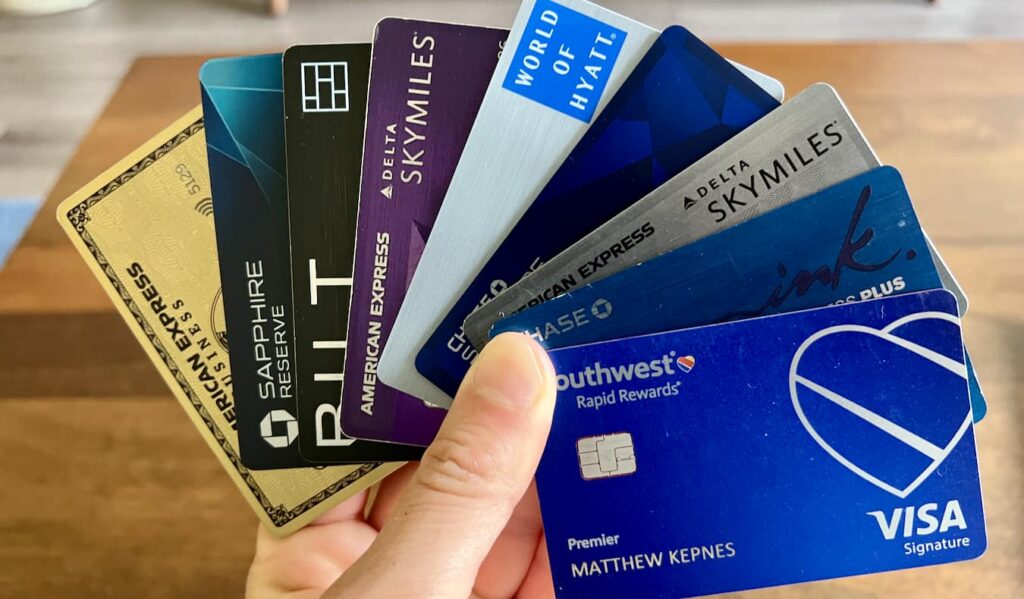
To effectively manage the top credit card plans, users should deploy a specific “Financial Stack”:
-
“Folio-Splitting” Software: Tools that automatically divert transactions to the card with the highest current multiplier based on merchant category codes (MCC).
-
Shadow-Rate Documentation: Keeping a record of the “Net Effective APR” (Interest – Reward Yield) to determine the true cost of carrying a balance.
-
Virtual Credentialing: Generating unique card numbers for every subscription to prevent “Zombie Charges” when a service is canceled, but billing continues.
-
3D Secure 2.0 Authentication: Ensuring all cards in the portfolio support the latest biometric handshake to minimize “False Positive” fraud alerts during high-value travel.
-
“Rent-Day” Maximization: Strategically timing large, non-recurring payments (e.g., insurance premiums) to coincide with limited-time multiplier windows (like Bilt’s “Rent Day”).
-
AI Reconciliation Bots: Deploying “Agentic RAG” (Retrieval-Augmented Generation) to scan statements for errors or “hidden” fee increases that human oversight might miss.
Risk Landscape and Taxonomy of Failure Modes
-
“The APR Trap”: With national average rates hovering around 19.7%, even a 6% reward yield is mathematically erased if a balance is carried for more than 45 days.
-
“Reward Devaluation”: Airlines and hotels frequently “re-price” their points. A “top plan” can become a “stranded asset” overnight if a primary transfer partner shifts to dynamic pricing.
-
“The Governance Gap”: Many users lack a “Review Cycle,” holding cards for years after their spending patterns have shifted, leading to “Fee Leakage.”
Governance, Maintenance, and Long-Term Adaptation
A successful credit strategy requires a “Portfolio Audit” every 180 days.
-
Adjustment Triggers:
-
Change in household income (>15%).
-
Significant shift in “Primary Spend Node” (e.g., moving from a city where you use “Transit” to one where you use “Fuel”).
-
The card issuer changes the “Net Reward Yield” by increasing the annual fee or capping a major category.
-
-
Maintenance Checklist:
-
Verify all “Statement Credits” have been triggered (e.g., airline incidentals).
-
Run a “MCC Audit” to ensure the card issuer is correctly categorizing your most frequent merchants.
-
Review “Secondary Insurance” (Rental car, cell phone protection) to ensure it hasn’t been quietly removed from the plan terms.
-
Measurement, Tracking, and Evaluation
-
Leading Indicators: Number of “Active Multipliers” in the wallet; percentage of spend going through “1.5% Base” cards vs. “3-6% Category” cards.
-
Lagging Indicators: Total “Net Value” (Rewards – Fees) at year-end; Credit Score stability (monitored via the FICO 10T trended data model).
-
Documentation Examples:
-
The Reward Ledger: A simple spreadsheet tracking “Points Earned” vs. “Real-World Value” at redemption.
-
The Interest-to-Reward Ratio: A monthly check ensuring that $0 interest is paid for every $1 of rewards earned.
-
Common Misconceptions and Oversimplifications
-
“Applying for cards ruins your credit”: False. While hard inquiries cause a temporary 5-10 point dip, the “Total Credit Limit” increase often improves the “Utilization Ratio,” providing a net positive score in 60-90 days.
-
“Closing a card is always bad”: False. If the annual fee exceeds the yield, the “Fee Burn” is worse than the minor impact on “Average Age of Accounts.”
-
“Travel points are always worth more than cash back”: False. In a high-inflation environment, “Cash in Hand” (1:1) is often safer than “Stranded Miles” subject to devaluation.
-
“Business cards don’t affect personal credit”: Partly False. Most issuers require a “Personal Guarantee,” and serious delinquencies will migrate to personal reports.
-
“The ‘Pre-Approved’ offer is the best deal’: False. These are often generic marketing; the “Top-Tier” offers are usually found via “incognito” browser searches or specific referral links.
-
“Rewards are taxable income”: Generally False. For personal cards, rewards are legally viewed as “rebates” on spending, not income. (Note: Business rewards may have different accounting treatments.
Conclusion
The selection of top credit card plans has evolved into a disciplined exercise in “Financial Engineering.” By 2026, the value is no longer found in the card’s physical material or its status-heavy brand name, but in its ability to act as a frictionless interface between the user and the global economy. A truly effective strategy requires a shift from “Passive Accumulation” to “Active Governance,” treating one’s credit portfolio with the same rigor as an investment account. As the payment landscape continues to fragment, the “Top Plan” is the one that offers the most adaptability, the highest security for autonomous systems, and the most transparent yield for the human behind the transaction.