Top Rewards Experiences in America: 2026 Strategy & Guide
The landscape of domestic loyalty programs in 2026 has transitioned from a purely transactional model where points were exchanged for commoditized goods into an experiential economy. For the high-net-worth individual and the strategic traveler alike, the goal is no longer the accumulation of balance sheet assets but the redemption for “Unbuyable Access.” This shift reflects a deeper psychological movement toward collecting rare moments rather than accumulating airline miles that are subject to consistent inflationary devaluation by the issuers.
To understand the current state of high-end redemptions is to recognize the “Experience Gap.” As airport lounges become increasingly crowded and “Elite Status” becomes easier to purchase through credit card spend, the true value of a loyalty program is now measured by its ability to bypass standard commercial barriers. Whether it is a private dinner at a Michelin-starred kitchen, sideline access at a major sporting event, or a curated wildlife excursion in a national park, these opportunities represent the apex of the American rewards market.
This editorial pillar deconstructs the mechanics of identifying and securing these elite opportunities. By moving beyond the superficial marketing of “free flights,” we will examine the structural reality of experience portals, the math of outsized redemption value, and the logistical rigor required to navigate these limited-inventory systems. This is a definitive reference for those who view their loyalty portfolios as a means to enhance their lifestyle through exclusive access rather than mere cost-saving measures.
Understanding “top rewards experiences in america”
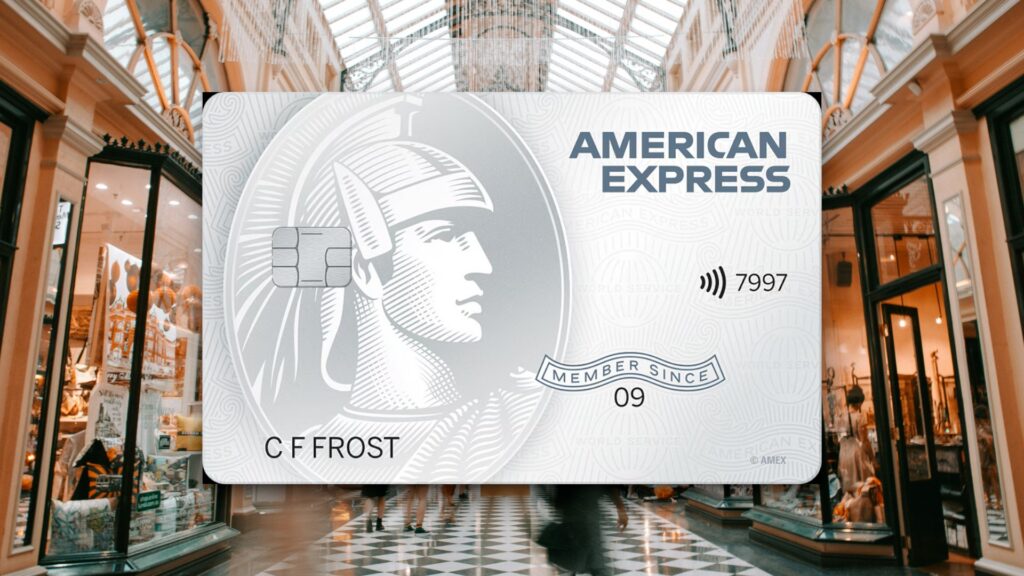
To engage with the top rewards experiences in America is to enter a marketplace defined by extreme scarcity and non-linear value. Unlike a standard flight redemption, where a point has a relatively fixed “cents-per-point” (CPP) valuation, an experiential redemption is subjective and often “price-inelastic.”
Multi-Perspective Explanation
From an Institutional Perspective, banks and hotel chains use these experiences to drive “Brand Stickiness.” It is easy to switch credit cards for a slightly better cash-back rate; it is much harder to leave an ecosystem that provided you with front-row seats to the US Open. These experiences are a high-margin marketing tool disguised as a consumer benefit, designed to keep “whale” spenders within a specific walled garden.
From a Consumer Perspective, these rewards serve as a “Luxury Arbitrage” vehicle. If a curated weekend at a Napa Valley vineyard costs 200,000 points but would have cost $4,000 in cash, the traveler is achieving a value of 2 cents per point. However, if that experience was “Invite Only” and could not be purchased with cash at all, the mathematical value becomes effectively infinite, shifting the reward into the realm of social and cultural capital.
From a Logistical Perspective, accessing these experiences requires a transition from “Passive Earning” to “Active Monitoring.” These are not “always-on” benefits. They are “Flash Events,” limited inventory items that may appear on a portal for only a few minutes before being claimed by a more diligent user.
Oversimplification Risks
A dangerous oversimplification is the belief that “Elite Status” automatically grants access to these top-tier experiences. In reality, status is merely the “table stakes” required to enter the auction. Most high-end experiences require a secondary transaction—either a significant point burn or a “Priority Access” window that is only available to holders of premium-tier credit products.
Contextual Background: The Rise of the Experiential Economy
The American rewards system has evolved through three distinct phases. The Commodity Phase (1980s–2000s) focused on the “Toaster and Travel” model, where points were a secondary thought. The Arbitrage Phase (2010–2020) saw the rise of “Point Bloggers” who focused on maximizing First Class travel to Asia or the Middle East.
In 2026, we occupy the Exclusivity Phase. Global travel has become more accessible, which has ironically decreased the “prestige” of a Business Class seat. Consequently, the industry has pivoted. Domestic issuers like American Express, Chase, and Marriott have invested heavily in “Experiences Portals.” They are no longer just financial intermediaries; they are now event promoters, luxury travel agencies, and concierge services. This evolution was accelerated by the realization that “Memories” do not have a fixed expiration date or a clear market value, making them harder for consumers to compare across competitors.
Conceptual Frameworks and Mental Models
1. The “Unbuyability” Index
This framework ranks a reward based on its accessibility to the general public.
-
Tier 1: Standard flight/hotel (Anyone with cash can buy).
-
Tier 2: Sold-out events (Accessible via secondary markets like StubHub).
-
Tier 3: Access-restricted events (Backstage, private tours, exclusive dinner with a chef).
The “top” experiences always reside in Tier 3, where even a million dollars cannot guarantee entry without the specific loyalty “key.”
2. The “Sentiment vs. CPM” Model
Traditionalists use Cents Per Mile (CPM) to judge a reward. The modern model adds a “Sentiment Multiplier.” If a reward allows a user to fulfill a lifelong aspiration (e.g., attending the Super Bowl), the “Value” of the points is multiplied by the rarity of the event. This prevents the “Optimization Trap,” where a user avoids a life-changing experience because the “Math” doesn’t perfectly align with a spreadsheet.
3. The “Inventory Decay” Heuristic
This model posits that the value of an experience is highest when it is first announced and decays rapidly as “influencer saturation” occurs. For the solitary rewards seeker, the goal is to identify emerging experience categories before they become standard “bucket list” items that are flooded with applicants.
Key Categories of Rewards Experiences
| Category | Primary Issuer Strength | Typical Point Cost | Critical Trade-off |
| Culinary / Dining | American Express / Chase | 10k – 50k per person | Limited to major urban hubs (NYC/LA/CHI). |
| Sports Hospitality | Marriott / Delta | 50k – 500k (Auction) | High “Point Volatility” due to bidding wars. |
| Music & Arts | Capital One / Citi | 5k – 30k per ticket | Early access, but seats are often fixed. |
| Nature / Adventure | Hyatt / National Parks | 30k – 150k per night | Requires advanced physical prep/travel. |
| Fashion / Culture | Amex Centurion | Invite Only | Extremely high annual fees for the card. |
Decision Logic: The “Value Floor”
When selecting an experience, one must determine a “Value Floor.” If the experience includes “logistics” (transportation, lodging, food), the point cost should be evaluated against the total market price of those components. If it is “Access Only,” the user must decide if the specific access is worth the “Opportunity Cost” of a week’s worth of free hotel stays elsewhere.
Detailed Real-World Scenarios and Decision Logic
The US Open “Behind the Scenes”
A traveler has 200,000 points and wants to attend a major tennis tournament.
-
The Logic: A standard ticket is $300. A “Rewards Experience” package includes court-side seats, a private lounge, and a photo on the court for 150,000 points.
-
The Decision: Since the package includes access that cash cannot buy, the user accepts a lower “per-point” value in exchange for the “Unbuyable Index.”
-
Failure Mode: Arriving late and missing the “timed access” window for the photo session.
The Michelin Kitchen Table
A culinary enthusiast uses points for a private table inside a 3-star Michelin kitchen.
-
The Action: They redeem 50,000 points for a seat that is rarely available to the public.
-
Outcome: They witness the “Service” firsthand, an education in high-performance management that transcends the meal itself.
-
Second-Order Effect: The “Social Capital” gained by sharing the story often outweighs the physical value of the food.
Planning, Cost, and Resource Dynamics
The “Cost” of these experiences is rarely just the points.
Resource Allocation Table
| Expense Type | Range | Variable Factors |
| Direct Point Cost | 20k – 1M+ | Auction vs. Fixed Price; Event Rarity. |
| Ancillary Travel | $500 – $3,000 | Flights/Hotels are not always included. |
| Time Investment | 10 – 40 Hours | Monitoring portals; travel time. |
| Opportunity Cost | 3 – 10 Nights | The loss of standard “Free Stays” at hotels. |
Tools, Strategies, and Support Systems
-
Push Notification Triggers: Setting alerts for specific keywords in the “Marriott Bonvoy Moments” or “Amex Experiences” apps.
-
The “Secondary Device” Strategy: Using a dedicated tablet for auction monitoring to avoid the latency issues of mobile phone apps during the closing seconds of a bid.
-
Point Pooling: Utilizing “Household Transfers” (offered by Hyatt/Chase) to combine balances into a single high-impact “Strike Fund.”
-
The “Calendar Flush” Technique: Booking placeholder “Standard” trips that can be cancelled for free if a “Top Experience” suddenly becomes available.
-
Concierge Relationships: Actually using the “Platinum” or “Black” card concierge to inquire about “off-menu” access that isn’t listed on the digital portal.
-
Community Intelligence: Monitoring forums like FlyerTalk or Reddit’s r/churning to see historical “winning bid” amounts for specific annual events.
Risk Landscape and Taxonomy of Failure Modes
-
“Auction Fever”: Bidding far more than an experience is worth because of the psychological pressure of the countdown.
-
“The Inclusion Gap”: Assuming a “Masters Tournament” ticket includes a hotel, only to find out that hotel rooms in Augusta are $1,500/night during that week.
-
“Physical Capability Mismatch”: Redeeming for a high-intensity adventure (e.g., hiking in Zion) without the requisite fitness level.
-
“Issuer Discretion”: Experiences are often “Subject to Change.” A promised celebrity meet-and-greet can be cancelled at the last minute with only a “points refund” as compensation, leaving the traveler with expensive non-refundable flights.
Governance, Maintenance, and Long-Term Adaptation
A rewards portfolio must be governed like an investment fund.
-
Monitoring Cycles:
-
Daily: Check “Moments” portals for fixed-price drops.
-
Monthly: Audit point balances to ensure no expirations are looming.
-
-
Adjustment Triggers: If an airline or hotel “Devalues” their chart, it is a signal to “Earn and Burn”—moving points into experiences before the exchange rate worsens.
-
Layered Checklist:
-
Is my “Strike Fund” (liquid points) high enough for a Tier 3 event?
-
Are my “Companion Certificates” or “Elite Status” levels active for this year?
-
Have I updated the “Emergency Travel Fund” (Cash) for ancillary costs?
-
Measurement, Tracking, and Evaluation
-
Leading Indicators: “Portal Check Frequency”; “Point Velocity” (rate of earning).
-
Lagging Indicators: “Unbuyable Access Success Rate”; “Total Experiences per Year.”
-
Documentation Examples:
-
The “Experience Journal”: Tracking the qualitative value of each redemption.
-
The “Auction Ledger”: Recording losing and winning bids to predict future costs.
-
Common Misconceptions and Oversimplifications
-
“Experiences are a bad value compared to First Class flights”: This ignores the “Scarcity Multiplier” of unique access.
-
“I need millions of points.”: Many local culinary or music events are only 10k–20k points.
-
“Auctions are rigged”: They are actually quite transparent, though they favor those with the most “Liquidity.”
-
“The ‘Black Card’ is the only way”: Mid-tier cards (e.g., Marriott Boundless) provide access to the same “Moments” portal.
-
“All experiences are for two people”: Many “Top” experiences are solo or allow for odd-numbered groups if asked.
-
“I can book these at the last minute.”: The best redemptions are usually claimed 4–6 months in advance.
Conclusion
The pursuit of the top rewards experiences in America is the ultimate refinement of the loyalty game. It requires a move away from the “Hoarding” of points and toward the “Strategic Deployment” of capital for life-enhancing moments. In 2026, wealth is no longer just about what you own, but where you are allowed to go. By applying the “Unbuyability Index” and maintaining a disciplined “Strike Fund,” a traveler can ensure that their loyalty is rewarded not just with a seat on a plane, but with a seat at the tables where history and culture are made.